Where Canvas Architecture Honors Landscape by Refusing to Dominate It
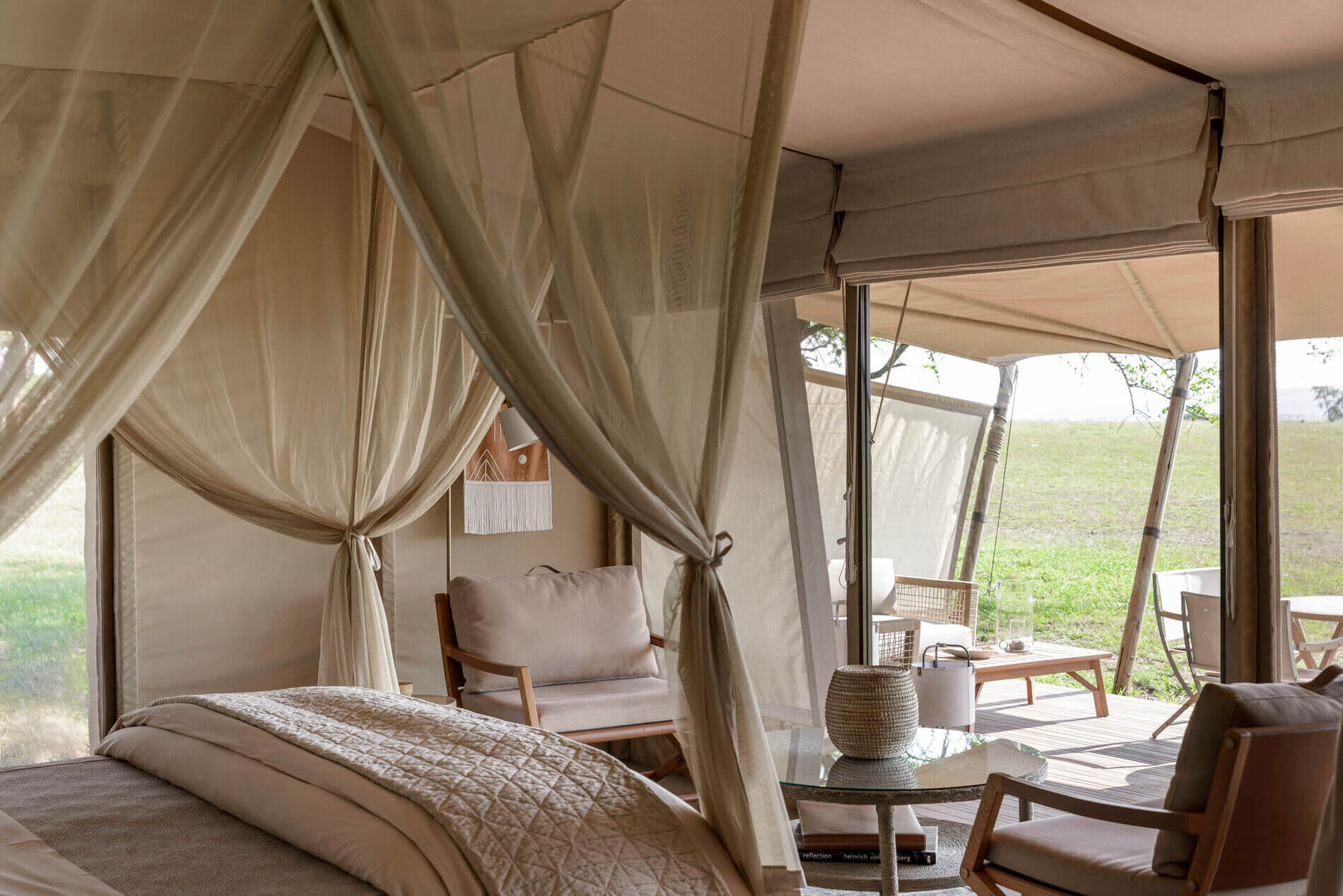
When GAPP Architects received the brief to redesign Singita Sabora, the directive was clear: create modern luxury that treads lightly on earth. The previous camp, while beautiful, carried too much colonial nostalgia with its Persian rugs and crystal decanters and brass fixtures. More problematically, it sat elevated on substantial platforms, psychologically and literally separating guests from the plains below. The 2020 transformation lowered everything. Tents now rest barely above ground on minimal wooden platforms, bringing sleeping spaces to eye level with grazing impala and wandering giraffe. This wasn't just aesthetic choice. Setting structures closer to earth reduces material requirements, minimizes visual impact on landscape, creates more intimate relationship with wildlife moving past at dawn.
The canvas itself represents intentional environmental decision. Unlike permanent structures requiring concrete and steel and glass, canvas can be struck and removed, leaving virtually no trace. The material is durable enough for year round use but impermanent enough to acknowledge that human presence here is temporary, that this land belongs to wildlife and always will. Canvas breathes naturally, eliminating need for energy intensive climate control that permanent walls require. During Serengeti's mild dry season, the breathable fabric combined with generous ceiling heights and strategic ventilation maintains comfortable temperatures without mechanical cooling. When nights cool, canvas traps warmth efficiently while allowing morning sun to naturally heat interiors.
The construction technique minimizes ground disturbance. Rather than pouring concrete foundations that permanently alter soil composition and drainage patterns, the tents rest on wooden platforms set atop minimal footings. When eventually the camp needs replacement or removal, the platforms can be dismantled and the land will recover within seasons rather than decades. This approach aligns with Singita's One Planet Living sustainability framework adopted in 2013, committing to environmental, economic, and social sustainability across all properties. The framework sets specific targets: fifty percent of fresh produce sourced within 100 kilometers, off grid lodges eighty percent powered by on site renewable energy, complete elimination of single use plastics.
Cécile and Boyd's interior design reinforces this light touch philosophy. The color palette stays rigorously earth toned: taupes, tans, beiges, browns, all derived from surrounding grassland and soil. Textures include hand stitched leather, thick canvas, woven hemp, natural fibers, avoiding synthetic materials that don't biodegrade. The campaign furniture references 1920s safari aesthetic without resorting to colonial costume, pieces chosen for longevity and repairability rather than disposability. Persian rugs and crystal gave way to materials sourced from African artisans: woven baskets inspired by local craft traditions, hand carved wooden elements, beadwork by Maasai communities. Every object tells story about place and supports local economies rather than importing generic luxury goods manufactured continents away.
Inside Nine Tents Where Solar Power and Passive Design Replace Energy Intensive Systems
Each of Singita Sabora's nine tented suites operates entirely off grid, powered by solar arrays positioned discretely away from guest sight lines. The solar system generates electricity for lighting, charges devices, powers the water heating, runs minimal refrigeration for in suite pantries. But the design prioritizes passive solutions over mechanical ones wherever possible. Thick canvas roofs with cutaway sections allow natural light to flood interiors, reducing artificial lighting needs. Cross ventilation through strategically positioned openings creates air flow that keeps spaces comfortable without fans or air conditioning. Generous ceiling heights allow hot air to rise away from living areas. Small bath sizes in bathrooms reduce water waste while solar heaters positioned beside each tent generate hot water without grid electricity.
The lighting design demonstrates how sustainability enhances rather than compromises guest experience. GAPP reduced exterior lighting to absolute minimum, just enough for safe movement between spaces after dark. This wasn't cost cutting but intentional choice recognizing that excessive artificial light pollutes night sky and disrupts wildlife behavior patterns. With minimal light competition, the African night sky reveals itself in spectacular detail: the Milky Way stretches overhead in dense band of stars, constellations shine with clarity impossible in light polluted environments, occasional shooting stars streak across darkness. Guests lying in canvas tents can watch this celestial display through roof cutaways, connecting with cosmos in way that brightly lit permanent lodges never allow.
The tent positioning maximizes natural advantages while minimizing environmental impact. GAPP placed each tent to capture best views of two nearby waterholes where wildlife congregates, orienting canvas walls and glass panels to frame specific sightlines. But they also positioned tents to take advantage of prevailing breezes for natural cooling, to capture optimal sun angles for passive heating, to minimize vegetation clearing required for construction. The spacing between tents provides privacy while reducing total platform area needed. Wooden walkways connecting tents to main areas follow existing game trails where possible, acknowledging that animals established the most logical routes through landscape long before humans arrived.
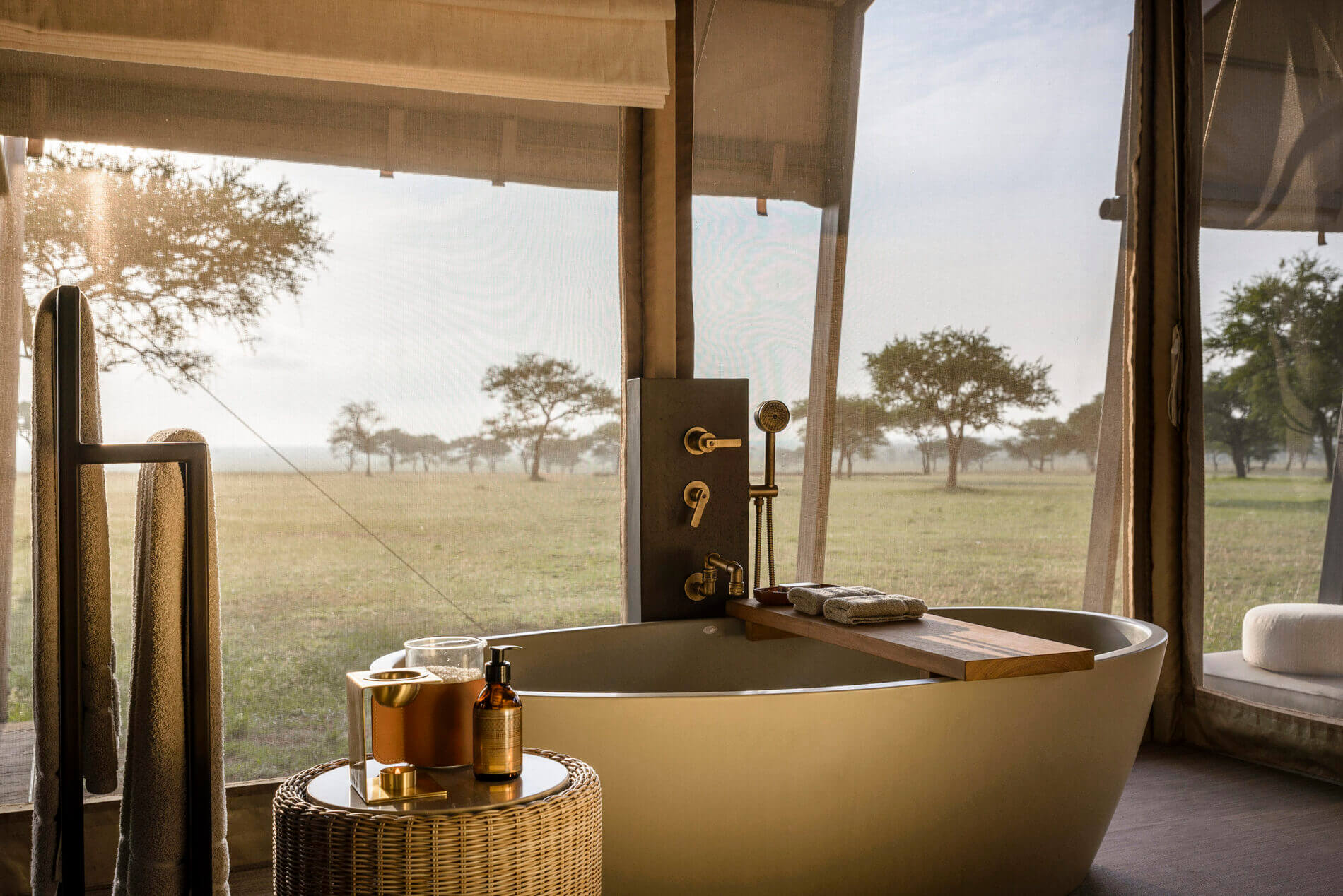
The bathrooms balance luxury with resource consciousness. Indoor showers use efficient fixtures that maintain pressure while reducing water consumption. Outdoor showers, positioned for complete privacy, allow bathing under open sky but incorporate water recycling where possible. Small soaking tubs rather than massive bathtubs reduce both water usage and heating energy required. Local plant based bath products replace chemical laden imported brands. The entire water system operates in closed loop as much as possible: rainwater harvesting supplements supply, greywater gets filtered and reused for landscape irrigation, waste water undergoes treatment before release.

Why Treading Lightly Creates Luxury More Profound Than Permanent Construction
What Singita Sabora accomplishes represents paradigm shift in how luxury safari understands its role. For decades, the industry assumed luxury required substantial construction: stone lodges, concrete platforms, glass walls, architectural statements proclaiming human ingenuity. But this approach fundamentally misunderstands why people travel to places like the Serengeti. They come to experience wilderness, to feel small against vast landscapes, to witness animals living without human interference, to temporarily escape built environments that dominate their daily existence. Constructing architectural monuments in such places defeats the purpose entirely, recreating the very dominance guests traveled to escape.
Treading lightly doesn't mean sacrificing comfort. The tents at Sabora offer every luxury: comfortable beds with quality linens, well designed bathrooms with hot water, private decks with seating, in room pantries with gourmet snacks, meditation spaces for contemplative practice. But these comforts exist within framework acknowledging impermanence, that human presence here is temporary and should remain invisible to future landscapes. Canvas can be struck. Platforms can be removed. Solar panels can be relocated. The land will heal completely once human occupation ends, returning to wilderness as if we were never here.
This philosophy aligns with growing recognition that sustainability isn't optional luxury but essential practice. Climate change threatens the very ecosystems that attract safari guests. Wildlife populations face pressure from habitat loss and human encroachment. The Great Migration that defines the Serengeti depends on intact landscapes across vast territories. Tourism that degrades these systems while profiting from them operates on borrowed time. Tourism that protects while profiting creates sustainable model where conservation and commerce align, where protecting wilderness makes economic sense, where luxury means honoring place rather than dominating it.
The 2020 redesign happened to coincide with pandemic forcing global reckoning about travel's environmental cost and tourism's relationship with natural spaces. When Sabora reopened in September 2020, it offered vision for how safari could evolve: smaller footprint, deeper connection, sustainability integrated rather than added afterward. Designer Boyd Ferguson, directing redesign remotely over Zoom during lockdowns, described it as "the Hermès handbag of camps" where every detail receives obsessive attention. But unlike luxury goods designed for display, Sabora's luxury operates through restraint, through what it doesn't do, through its commitment to remaining essentially invisible.
For travelers seeking this experience: Singita Sabora operates year round with rates from $1,650 per person per night off peak to $2,400 peak season. The nine tent limit ensures intimate scale and personalized attention. Children aged 10 and older welcome. Access via Sasakwa airstrip connects to Arusha or international flights. Peak Great Migration viewing occurs May through July, though resident wildlife and camp's design philosophy make any season compelling. The investment supports not just accommodation but conservation funding that protects 350,000 acres and employs local communities in sustainable alternative to poaching.
Our sister company Siana Travel specializes in crafting Tanzania safari experiences that prioritize sustainability and authentic connection. Their expertise ensures your journey aligns with conservation values: selecting properties with genuine environmental commitments, supporting community programs, minimizing carbon footprint where possible, combining camps that offer complementary experiences. Contact Siana Travel for itinerary planning that extends Sabora's light touch philosophy across your entire East Africa journey.
Book understanding that Singita Sabora represents more than exceptional safari accommodation. It's proof that luxury and sustainability need not conflict, that treading lightly on earth creates deeper connection than heavy construction, that canvas walls and solar power and minimal platforms can deliver experiences more profound than glass towers and grid electricity and permanent foundations. The future of safari lies not in building more but in building less, not in dominating landscapes but in honoring them, not in proclaiming human presence but in making that presence nearly invisible. Sabora demonstrates this future already exists, that the highest expression of luxury means leaving no trace except memories, that respecting earth creates experiences no amount of architecture could match.

Where Guest Deli Philosophy and Flexible Dining Reduce Operational Footprint
The Guest Deli concept that defines Singita Sabora's dining approach serves sustainability as much as convenience. Traditional safari lodges operate restaurant style: fixed meal times, centralized kitchens, synchronized service for all guests, generating substantial food waste when preferences vary. The Guest Deli inverts this model. Wicker baskets and refrigerators in the main camp area stay stocked with gourmet options throughout the day: fresh salads, artisanal cheeses, cured meats, house made desserts, tropical fruits. Guests take what appeals and eat wherever they choose, whenever they prefer. This eliminates overproduction, reduces food waste, allows kitchen to prepare exactly what's consumed rather than catering to potential demand.
The farm to table philosophy minimizes transport emissions and supports local agriculture. Singita sources seasonal produce from farms within 100 kilometer radius, dramatically reducing carbon footprint compared to importing ingredients from distant suppliers. The seasonal menus adapt to what's locally available rather than demanding year round access to ingredients that require greenhouse cultivation or long distance shipping. Regional specialties feature prominently: line caught fish from Tanzanian coast, game meats from sustainable sources, African grains and root vegetables, indigenous herbs and spices. The approach connects guests to place through cuisine while supporting communities that make conservation economically viable.
The wine program, despite featuring impressive collection from South African estates, demonstrates thoughtful curation over endless selection. Rather than maintaining massive cellars requiring substantial climate control, Singita rotates smaller inventories more frequently, keeping energy requirements minimal. The temperature controlled facility on site uses efficient systems and passive cooling where possible. By offering wines by the glass from temperature controlled dispensers rather than opening full bottles, waste reduces dramatically. Sommeliers guide tastings that educate guests about South African viticulture while managing consumption responsibly.
Meal locations throughout camp utilize existing shade and natural ventilation rather than constructing elaborate dining structures. The main tent with its woven ceiling inspired by traditional African basketry provides gathering space during heat of day. The outdoor deck under balanite trees offers naturally cooled dining. The boma firepit creates evening atmosphere using sustainable wood sources. Private deck dining at individual tents eliminates need for guests to congregate in energy intensive spaces. The flexibility reduces operational energy while creating varied experiences that feel curated rather than institutional.
Where Wildlife Connection Deepens Through Minimal Barriers and Amplified Senses
Setting tents at ground level rather than elevating them creates visceral connection with wildlife that elevated lodges simply cannot match. When elephant herds pass at dawn, you're at approximate eye level with calves, watching family dynamics unfold meters away without height differential creating psychological distance. When lions rest in shade near camp during midday heat, you observe from similar elevation, predator and observer occupying same horizontal plane. When buffalo wander past at midnight, you hear their breathing through canvas walls, feel vibrations of their movement, smell their distinctive musk, every sense engaged in way solid structure would prevent.
The canvas walls amplify sounds rather than muffling them. Permanent lodges with concrete and glass might provide better sound insulation, but insulation defeats the purpose of sleeping in Serengeti. Through canvas, you hear everything: the rumbling calls of lions communicating across territory, the high pitched giggling of hyenas on nocturnal hunts, the trumpeting warnings of elephant matriarchs, the snorting alarm calls of zebra detecting predators. Some guests initially request quieter accommodations, then realize the sounds aren't disturbance but privilege, constant reminder that you're embedded within functioning ecosystem rather than observing from protected distance.
The Grumeti Reserve itself demonstrates what conservation can achieve when tourism supports rather than exploits wilderness. In the 1980s and 1990s, intense poaching devastated this area. Wildlife populations plummeted. The landscape emptied. When the Grumeti Fund partnership began in 2002, bringing serious anti poaching efforts and sustainable tourism model, recovery proved possible. Elephant populations increased fourfold. Buffalo numbers jumped from 600 to 9,000. The Great Migration resumed its historic route through the reserve. The success demonstrates that tourism done thoughtfully can fund conservation that protects vast wilderness, creating economic incentive for preservation stronger than extractive alternatives.
Private reserve status enables wildlife viewing without the vehicle congestion that characterizes popular Serengeti sections. Game drives use private vehicles with dedicated guides, allowing unlimited time with any sighting. Guides can navigate off established tracks when appropriate, following animal movements rather than constrained by road restrictions. Night drives illuminate nocturnal species. Walking safaris provide ground level immersion. The low guest numbers at Sabora ensure you're often the only observers watching lions hunt or elephants bathe, the privilege of exclusive access made possible by tourism model that charges premium rates to minimal guests rather than maximizing volume.