Why the food at IZZA Marrakech made us reconsider every hotel restaurant we have eaten in this year
We did not expect a fourteen room boutique hotel hidden inside the medina to serve some of the best meals we have had anywhere this year. Most boutique hotel kitchens in Marrakech coast on atmosphere and charge for the terrace view. IZZA does not coast on anything.
Chef Ahmed El Hardoum, previously at El Fenn, built a menu around one principle: if it is not in season and not from Morocco, it does not go on the plate. Seafood arrives from Dakhla, Safi and Oualidia. Meat comes from Rahmna farms. Nothing enters from greenhouses, so the menu changes constantly. Plates arrive designed for communal eating, and the experience becomes social naturally. You order multiple dishes, everyone tastes everything, and conversations with neighbouring tables happen without trying.
Over seven nights we worked through nearly the entire menu.
Start with the crab and leek croquettes. Crisp exterior, generous crab filling, seasoning that holds without overpowering. We ordered them twice. The prawns were exceptional, cooked with a precision that made them stand out as one of the strongest starters on any menu we have tried recently. The Moroccan fried calamari arrived with a citron confit sauce that changed how I think about the dish entirely. Tender without being rubbery, bright without being sharp, with a complexity that no standard Mediterranean kitchen could replicate. Beef carpaccio used local Moroccan beef with argan oil and toasted pine nuts. The kind of marbling and depth that comes from cattle raised properly on actual land.
The spinach gnocchi surprised me. I am not normally a gnocchi person, but light ricotta filling and minimal sauce made it worth returning to. The tajine was exactly what a tajine should be and nothing more. The slow cooked beef was extraordinary. And the tiramisu, a dessert I would normally wave away, was genuinely incredible. We ordered it three times across seven nights, and each time it arrived as if the kitchen had made it specifically for that moment.
Breakfast runs until half past ten. The loubia with beldi egg became my consistent order. White beans slow cooked with cumin and paprika, finished with a soft poached egg that broke across the surface exactly right. The Moroccan crushed avocado delivered proper heat through harissa, while m'semen and beghrir arrived warm with honey and preserves made in house. Fresh orange juice squeezed to order. Seasonal fruit that tasted like fruit grown in sun rather than fruit that survived a shipping container.
The rooftop restaurant Noujoum takes outside guests. When locals in Marrakech book tables at a fourteen room boutique hotel for dinner, the kitchen has earned something that no press release can manufacture.
Inside the Leila room at IZZA Marrakech where tadelakt bathrooms and courtyard fountains set the standard for boutique accommodation in the medina
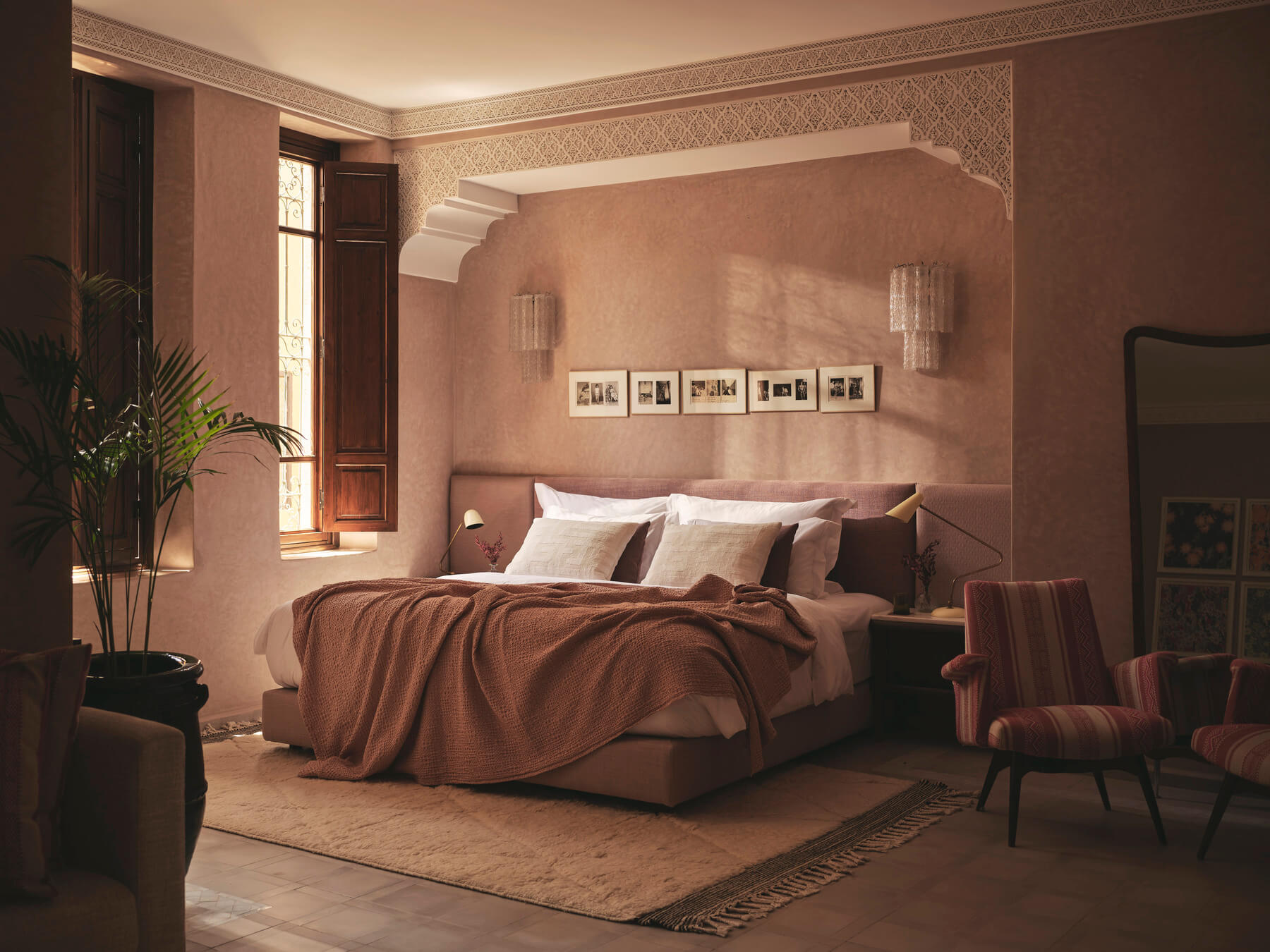
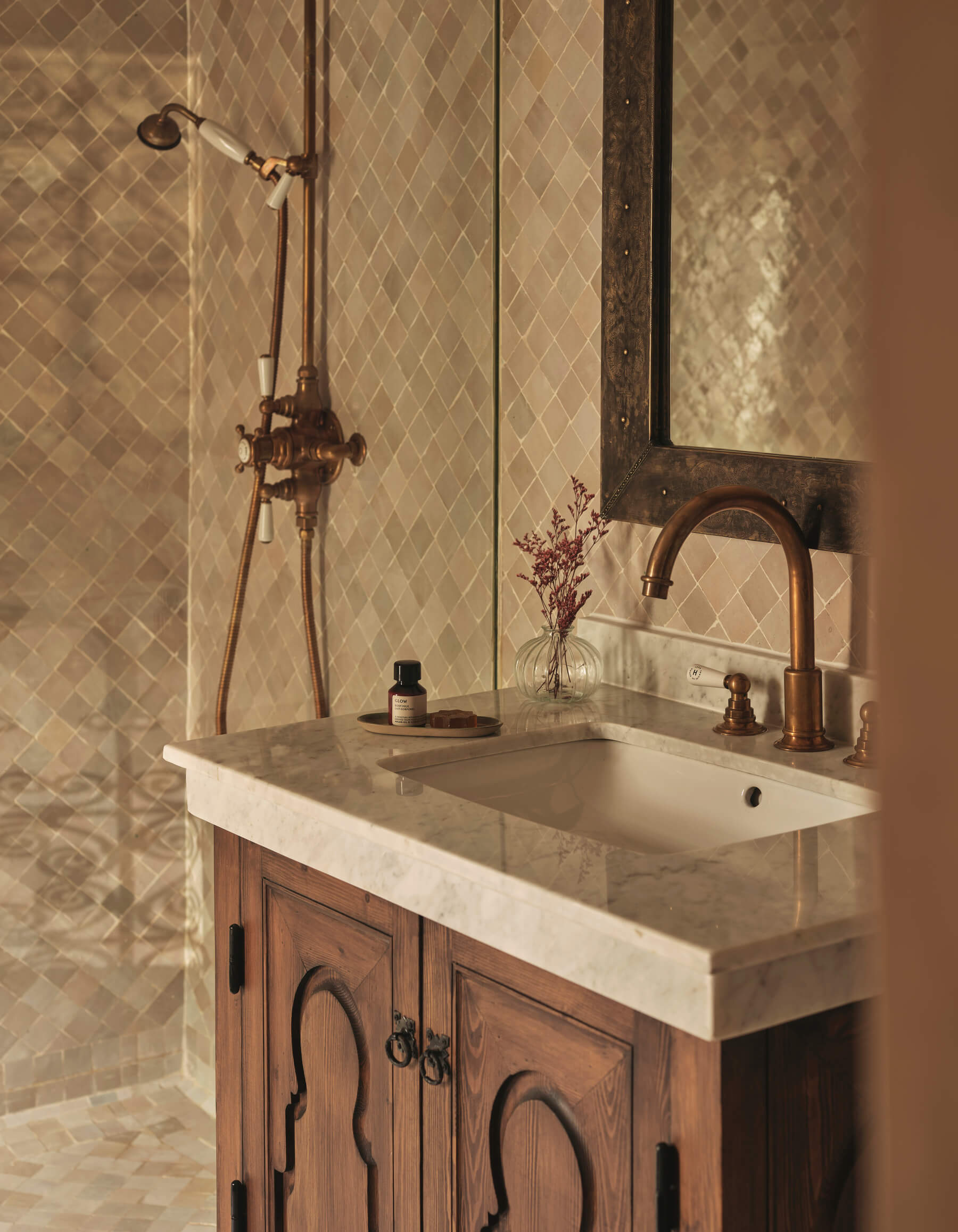
We stayed in Leila for seven nights and understood within the first hour why multiple reviews single out this room. The tadelakt work alone justified the choice. Shower and bath carved from polished plaster that took weeks of hand finishing to achieve a texture somewhere between warm stone and cooled silk. We took photos. We spent genuinely relaxing time in that bath, which is something that rarely happens in hotel rooms where bathrooms serve function over everything else.
The room overlooks the central courtyard and fountain. A shared terrace provides views down into the space where guests gather for afternoon tea or pre dinner drinks. You feel connected to the social rhythm of the property without sacrificing privacy. You hear the fountain constantly, a gentle murmur that became the soundtrack to our entire stay, the thing we noticed most when it was finally absent on the drive to the airport.
Every IZZA room tells a different story. Grace Jones features a copper roll top bath. Yves sits elevated with views over the lap pool. The IZZA apartment, named after Dalla Izza herself, provides split level space with private courtyard access. Marianne Faithfull offers a private terrace. Jack Kerouac delivers pistachio hues and a writer's desk positioned beneath a window that catches morning light. Cecil Beaton, Marella Agnelli, Paul Bowles, Allen Ginsberg and Talitha Getty complete the collection. Each room named after a counter culture icon who sought creative freedom in Marrakech. The references are present in every detail but never performing for attention.
What connects all fourteen rooms matters more than what separates them. Egyptian cotton linens with high thread counts. Organic body care products from the Ourika Valley. Nespresso machines. Thoughtful lighting that shifts between morning clarity and evening warmth. Proper storage that remains genuinely rare in boutique properties. And soundproofing that actually blocks medina noise, which matters enormously in a city where a scooter can pass your window at any hour.
We unpacked completely on arrival. Hung clothes. Arranged books. Made the space ours. That feeling, the sense that you can genuinely settle rather than just occupy a room for a few nights, is what separates good hotels from the ones you remember.

What Karim Irrgang brings to IZZA Marrakech and why visible leadership changes everything about a hotel stay
What sets IZZA apart completely is Karim. He walks the property throughout the day. Not hovering, not checking on things from a distance, just present. He greets guests by name. Asks how your morning went. Ensures details flow without you noticing the machinery behind them.
Karim grew up between Germany and Algeria. In 2005 he was a waiter in Munich when his friend dragged him to a bookshop before coffee. While she looked for her book, he wandered into the tourism section and found a copy of 100 Best Hotels by a German writer. He bought it. That night he lay in bed turning pages, looking at properties from Bora Bora to Bangkok, and decided. He wrote his CV, printed it a hundred times, and sent it to a hundred hotels around the world. A few months later he moved to Bangkok for what was supposed to be six months. Those six months became twenty years. He worked seven years with Banyan Tree across Thailand, the Seychelles, Morocco, Australia and the UAE. Then Cheval Blanc in the Maldives. D Hotel Maris in Turkey. El Fenn here in Marrakech. He left the corporate world because he believes hospitality is a face to face thing about creating memories, and the larger operations had stopped allowing that. His wife is from Marrakech. He now has two kids and what he calls a forty foot container of belongings. After two decades of running large scale luxury operations around the world, he chose a fourteen room house hidden inside a medina. He stopped looking.
Watching him interact with the hotel was one of the quiet highlights of our stay. The property was immaculate. Every surface clean. Every detail attended to. When leadership operates this visibly, the entire team follows, and we felt it in every interaction across seven nights.
Imad and Fouazi run the bar and restaurant with warmth and real attention. Khalil manages food and beverage with quiet efficiency. Houssine on reception is genuinely funny. Btisam and Salma greet you each morning like you have been coming here for years. Nobody performs hospitality. They simply practice it. The difference is tangible and it is the reason IZZA feels less like a hotel and more like what it claims to be. A house.
The Pikala bike tour that changed how we see Marrakech and why the best IZZA experiences happen beyond its walls
The Pikala bike tour was something I did not want to do. I had no interest. But we went, and within ten minutes on refurbished Dutch bikes weaving through streets I would never have found on foot, I understood. Pikala is a social enterprise founded by Cantal Bakker, a Dutch woman who trains local Moroccan youth as guides and mechanics. The tours take you through the medina and the Palmeraie with people who actually know the city, not as a tourist attraction but as the place where they grew up.
Our guide Paul was warm and knowledgeable and made the ride feel effortless. When we finished, we wanted to go again. One of the best ways to experience Marrakech. The kind of thing you would never book yourself and then cannot stop recommending.
We also did a hot air balloon one morning. Rising above the Palmeraie at dawn, watching the Atlas Mountains surface through morning haze while the city woke beneath us. Transfers throughout the stay were flawless.

How Bill Willis invented the Marrakech look and why his legacy runs through every surface at IZZA without becoming a museum
Bill Willis arrived in Marrakech in 1966 on the honeymoon of John Paul Getty Jr and Talitha Getty. He fell in love with the city and never left. Over the next 43 years he single handedly created the design vocabulary that the entire Marrakech luxury industry now treats as its own. He popularised tadelakt as a wall treatment in living spaces when it had previously been confined to hammams. He revived zellige tilework and traditional crafts that were genuinely on the verge of extinction. He designed homes for Yves Saint Laurent and Pierre Bergé, for the Rothschilds, for Marella Agnelli. He created the interiors of Dar Yacout and Rick's Café in Casablanca. Jacques Grange put it simply. Bill created the Marrakech look. Every riad, every boutique hotel, every luxury interior in this city owes something to a man from Memphis, Tennessee who followed the Gettys to Morocco and refused to leave.
The owner of IZZA owns Dar Noujoum, Willis's former home twenty kilometres outside the city. Inside they found a suitcase. Personal letters, drawings, photographs. Correspondence with Talitha Getty, Yves Saint Laurent and Mick Jagger. That suitcase transformed a property development into a personal project with a cultural spine.
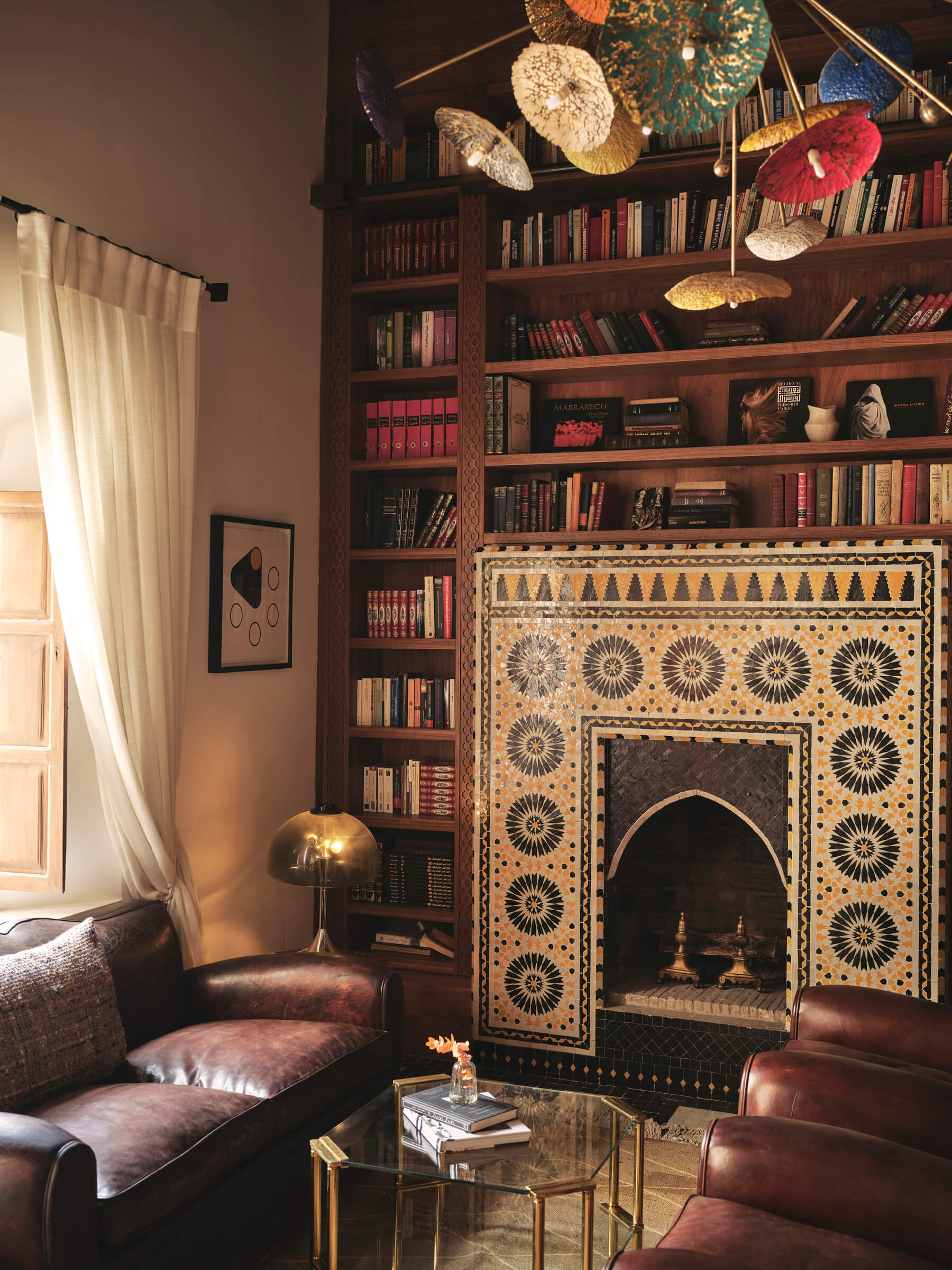
His presence pervades the hotel without ever becoming a shrine. Bill's Bar features his letters and photographs on the walls, including one from Yves Saint Laurent refusing to lend Willis money. The trompe l'oeil floor mirrors Rick's Café. Dogs are welcome. The library contains one of his original fireplaces. His room sketches appear in bedrooms. The rooftop restaurant is named Noujoum after his home. Willis died in 2009, before IZZA was conceived, but his aesthetic lives through the property the way a composer's work lives through an orchestra. Present in every note. Never needing to appear on stage.
The actual architecture was led by Amine Kabbaj of Archimath, one of Morocco's most respected architects and executive president of the Marrakech Biennale, who worked on the project for the full eight years. Interiors and branding were directed by San Yetlee. One entire riad, Riad 3, is new construction built using identical traditional techniques and is indistinguishable from the originals. The zellige tiles throughout were cut and placed individually by artisans from Fes. The stucco plasterwork above doorways took months of hand carving. Courtyard fountains use reclaimed stone from regional quarries. Nothing arrived prefabricated. Nothing was rushed. Eight years is a long time to build fourteen rooms, and you can feel every single one of those years in the weight and finish of what they produced.
Why the 300 artwork collection at IZZA Marrakech turns a boutique hotel into a gallery you sleep inside
The art collection runs to three hundred works. Leila Alaoui's life size Les Marocains portrait series commands the lobby, capturing Moroccan identity with an intimacy that makes you stop mid stride. Hassan Hajjaj appears throughout. Contemporary digital pieces and AI generated art occupy unexpected corners. The Museum in the Medina partnership makes IZZA home to one of the world's largest physical NFT exhibitions. Every artwork includes object labels with QR codes for deeper information, though you can ignore them completely and simply let the visual richness wash over you as you move between courtyards.
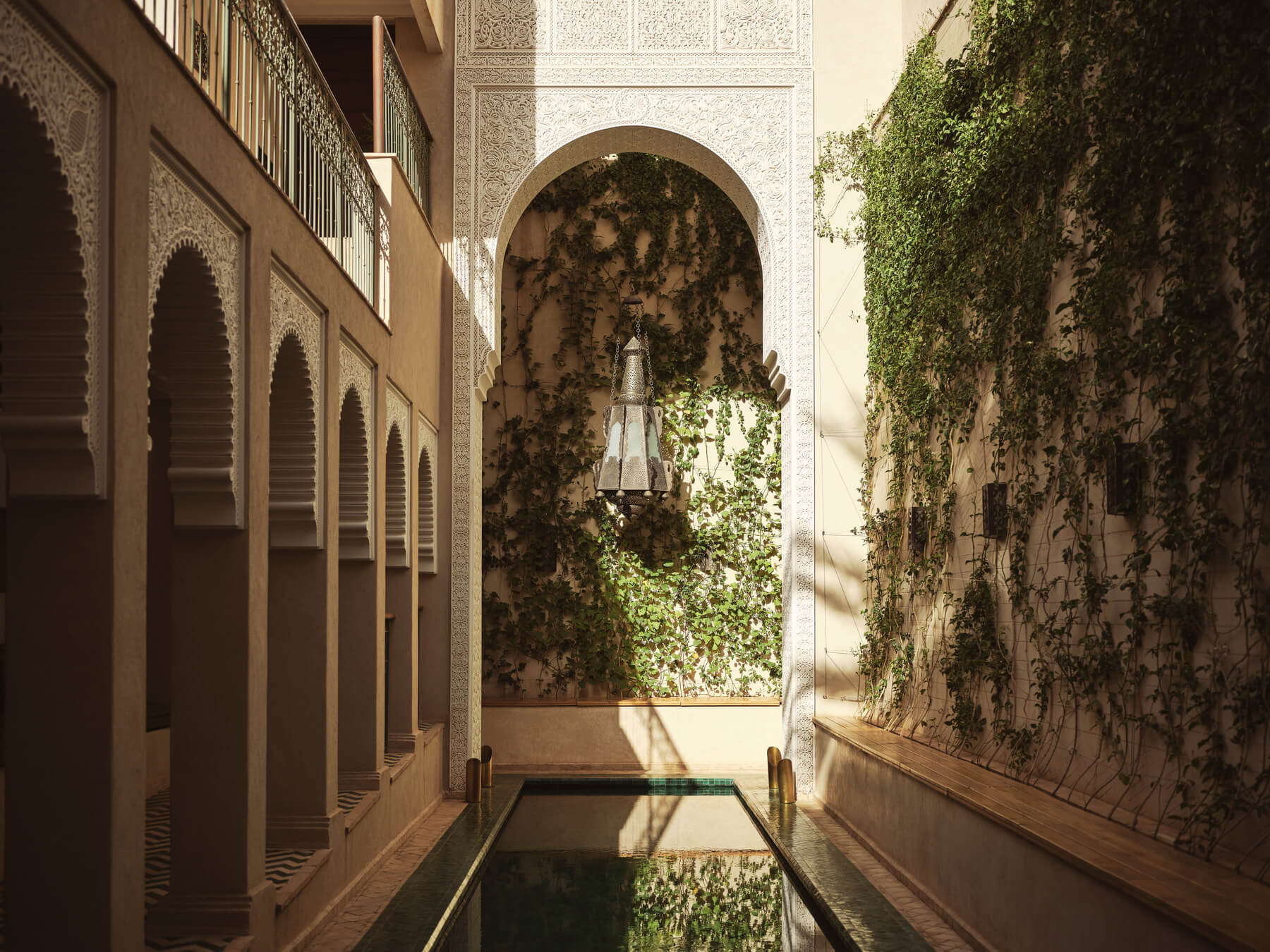
We discovered new pieces daily across seven nights. The way afternoon light hits certain textures and transforms them. The warmth of reclaimed wood meeting cool limestone. Keyhole arches framing courtyard views like someone composed each sightline deliberately. Carved fountains positioned to create constant murmur without overwhelming conversation. The building reveals itself slowly, and that patience is part of the design.
What could be better at IZZA Marrakech and the one detail that would elevate everything further
The coffee is illy. Good coffee, but not special. IZZA sources seafood from three coastal towns, meat from specific farms, and refuses greenhouse produce entirely. The commitment to local provenance is genuine and runs through every meal. Which makes the illy coffee feel like the one place where that philosophy stops short. A partnership with a Marrakech roastery would complete the circle, and since the restaurant already welcomes outside guests, it would give the city another reason to walk through that unmarked door.
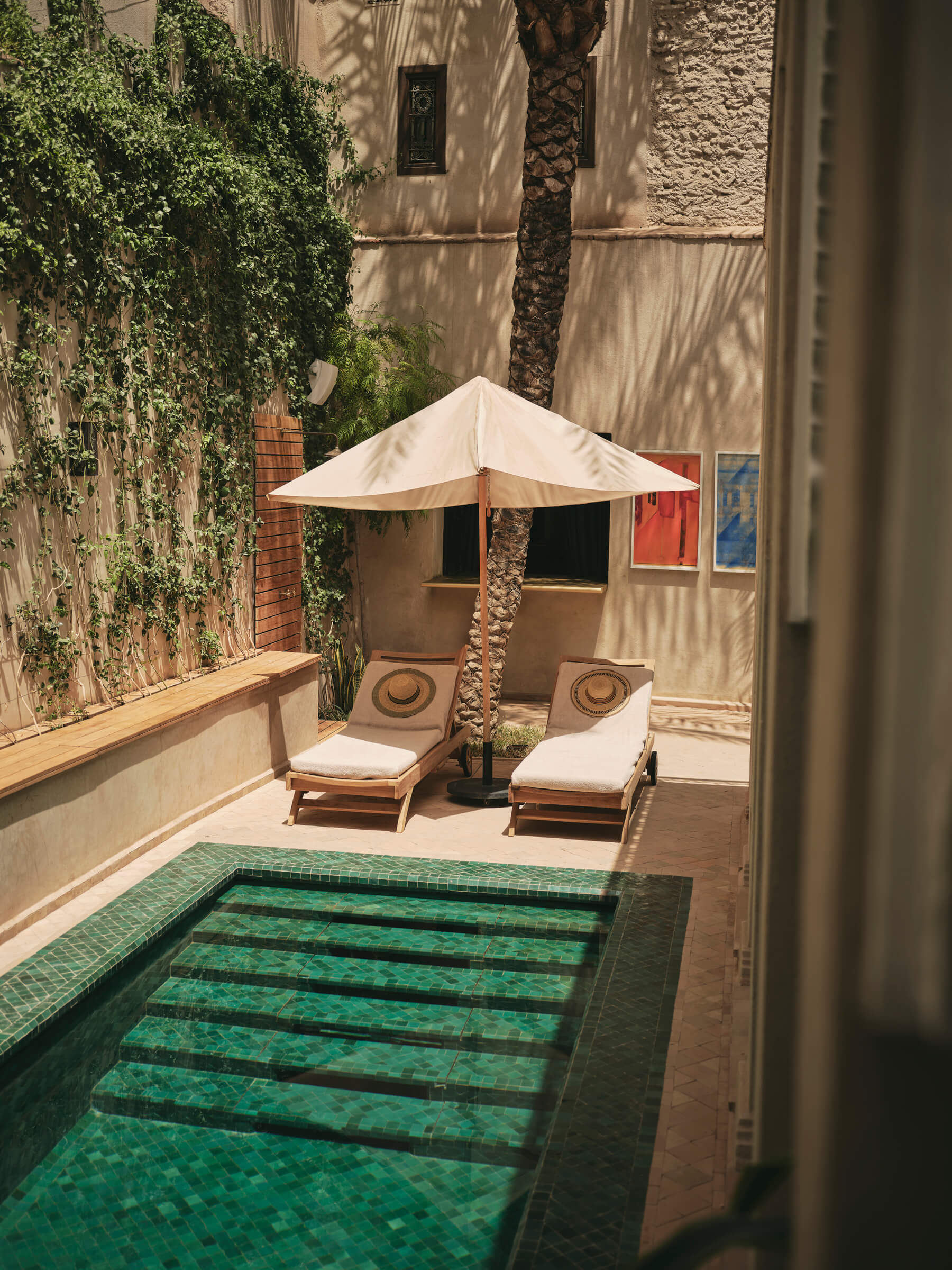
One of the courtyards with the cold water pool gets less sun than the others. That is not a complaint. It works perfectly for staying cool when the rooftop sundeck, which is a complete sun trap, has been doing its job all morning.
Beyond these two points, we struggled to find anything else worth mentioning.
The verdict on IZZA Marrakech after seven nights in the medina
IZZA is worth every penny. I would raise the price.
This is Marrakech for people who already travel frequently, who recognise when a property gets the details right, who have done the palatial riads and the grand hotels and now want something with substance rather than scale. IZZA never tries to impress. It simply delivers, consistently, across seven nights, without a single moment where the standard dropped or the attention wavered.
You do not want to leave. That is the honest truth of it. The property is deeply homely. The staff are exceptional. The food rivals the best standalone restaurants in the city. The design honours Moroccan craft without ever performing it. The art collection transforms every corridor and courtyard into something worth pausing for. And the murmur of that fountain follows you long after you have gone.
Fourteen rooms. Seven ancient homes. Eight years of restoration. One Berber woman's name on the door. A managing director who chose this house over every large scale luxury operation on earth. And a kitchen that made us reorder the crab croquettes, reorder the tiramisu, and reconsider what we thought hotel restaurants were capable of.
This is not a hotel trying to be seen. It is a home that happens to welcome guests.
And after seven nights, we left as exactly what IZZA promised we would become.