How 44,000 Acres and One Lodge Create Safari Exclusivity That Actually Means Something
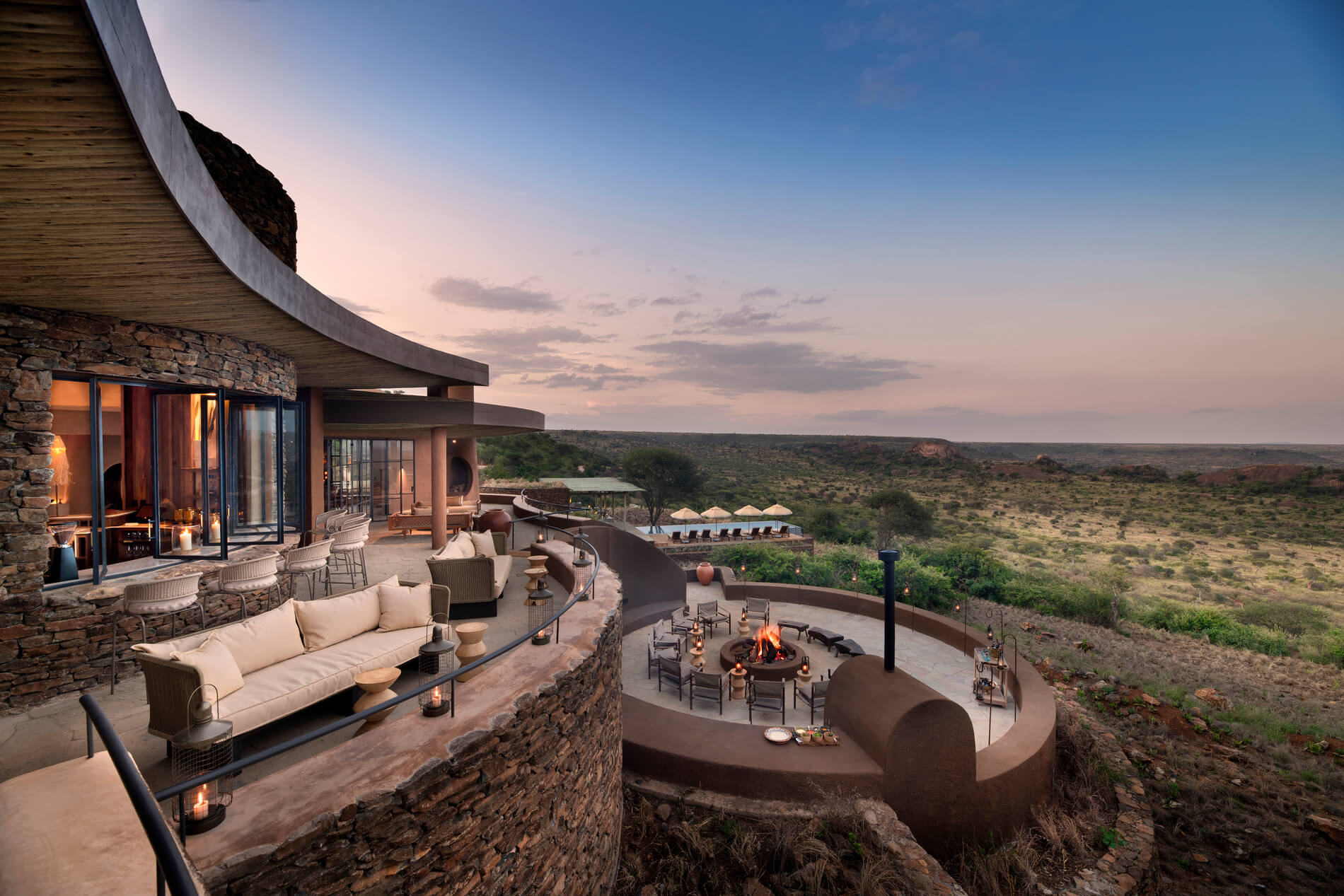
The main terrace has no walls, only the kind of view that makes walls seem like an insult to the landscape. From this vantage point on the eastern escarpment of the Great Rift Valley, the Rock Sanctuary rises in layers of weathered granite, formations that have stood for millennia while Mount Kenya floats on the southern horizon, appearing and disappearing as clouds shift according to their own logic. Below, the Ewaso Narok River cuts through the valley in a green corridor of permanent water that draws wildlife year round regardless of season. At dawn, when lions call from the riverbank and first light catches Mount Kenya's peak, you understand why andBeyond chose this specific site rather than easier, flatter, more accessible locations elsewhere in the conservancy.
I arrived after a 55-minute flight from Nairobi to Loisaba Airstrip, then an hour's drive that functioned more as private safari than transfer. Zebras crossed the road at their leisure, secure in their right of way. A tower of giraffes browsed acacia trees with the unhurried grace of creatures who understand they own the landscape. When my guide Bernard spotted a leopard tortoise, its shell marked with yellow and black patterns precise as brushwork, he stopped the vehicle entirely so I could photograph it properly without time pressure or other vehicles waiting behind us. Time moves differently when you're not competing with a convoy of safari trucks for sightings, when the next game drive vehicle you'll encounter might be tomorrow rather than ten minutes from now.
This is Kenya's northern Laikipia Plateau, a two million acre mosaic of conservancies and ranches where some of Africa's most urgent conservation work unfolds away from the tourist circuits that dominate the Maasai Mara during migration season. Laikipia contains the second largest elephant population in Kenya and protects over 65 percent of Kenya's critically endangered Grevy's zebras, those narrow-striped variants with white bellies that graze alongside more common plains zebras. It shelters viable populations of African wild dogs when fewer than 6,000 remain continent wide, their painted coats and oversized ears making them unmistakable during the rare sightings most safari-goers never experience. Most significantly for Suyian, it hosts the largest known concentration of melanistic leopards in Africa, including Giza Mrembo, the famous female black leopard born less than a kilometer from neighboring Laikipia Wilderness Camp who has become so comfortable around safari vehicles that she hunts in daylight rather than restricting herself to nocturnal activity like most of her spotted relatives.

One Lodge, One Conservancy, and the Mathematics of Real Safari Exclusivity
The main terrace has no walls, only the kind of view that makes walls seem like an insult to the landscape. From this vantage point on the eastern escarpment of the Great Rift Valley, the Rock Sanctuary rises in layers of weathered granite, formations that have stood for millennia while Mount Kenya floats on the southern horizon. Below, the Ewaso Narok River cuts through the valley in a green corridor of permanent water that draws wildlife year round regardless of season. At dawn, when lions call from the riverbank and first light catches Mount Kenya's peak, the site selection makes perfect sense.
The journey here starts with a 55-minute flight from Nairobi to Loisaba Airstrip, then an hour's drive that functions more as private safari than transfer. Zebras cross the road at their leisure. A tower of giraffes browses acacia trees with unhurried grace. When guide Bernard spots a leopard tortoise, its shell marked with yellow and black patterns precise as brushwork, he stops the vehicle entirely. Time moves differently when safari vehicles are this scarce, when the next encounter with another group might be tomorrow rather than ten minutes from now.
This is Kenya's northern Laikipia Plateau, a two million acre mosaic of conservancies and ranches where serious conservation work unfolds away from the tourist circuits. Laikipia contains Kenya's second largest elephant population and protects over 65 percent of the country's critically endangered Grevy's zebras. It shelters viable populations of African wild dogs when fewer than 6,000 remain continent wide. Most significantly, it hosts the largest known concentration of melanistic leopards in Africa, including Giza Mrembo, the famous female black leopard who hunts in daylight rather than restricting herself to nocturnal activity like most leopards.
Michaelis Boyd Architecture That Borrows From Kopjes Without Copying Them
Nicholas Plewman Architects and Michaelis Boyd designed andBeyond Suyian Lodge to vanish into landscape rather than announce itself against it. The main building and 14 guest suites curve into the escarpment like natural outgrowths, their domed roofs echoing the granite kopjes without literal mimicry. Green roofs planted with indigenous species blur the boundary between structure and stone. From certain angles, particularly at dusk when shadows deepen, the architecture reads as extension of geology rather than imposition upon it.
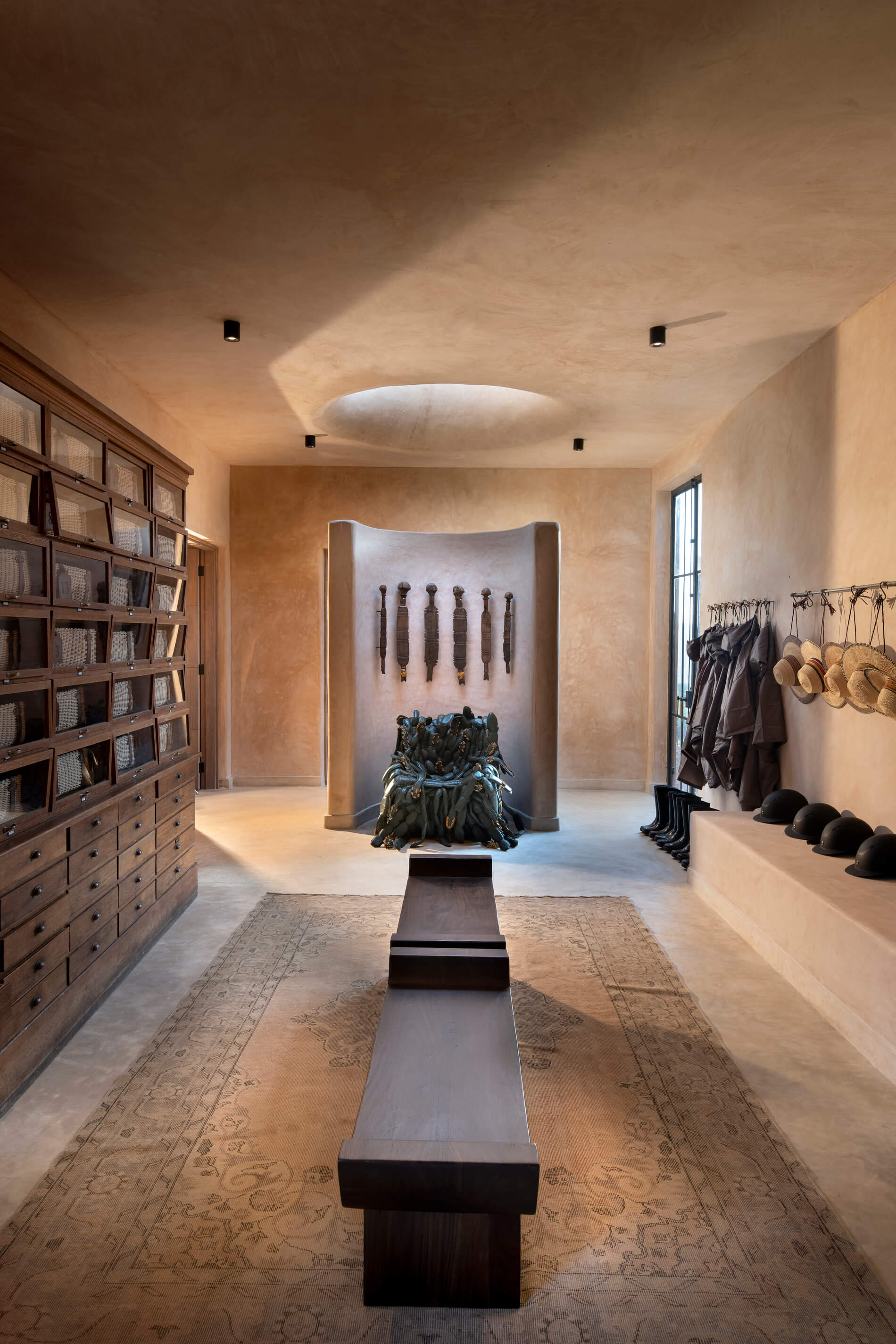
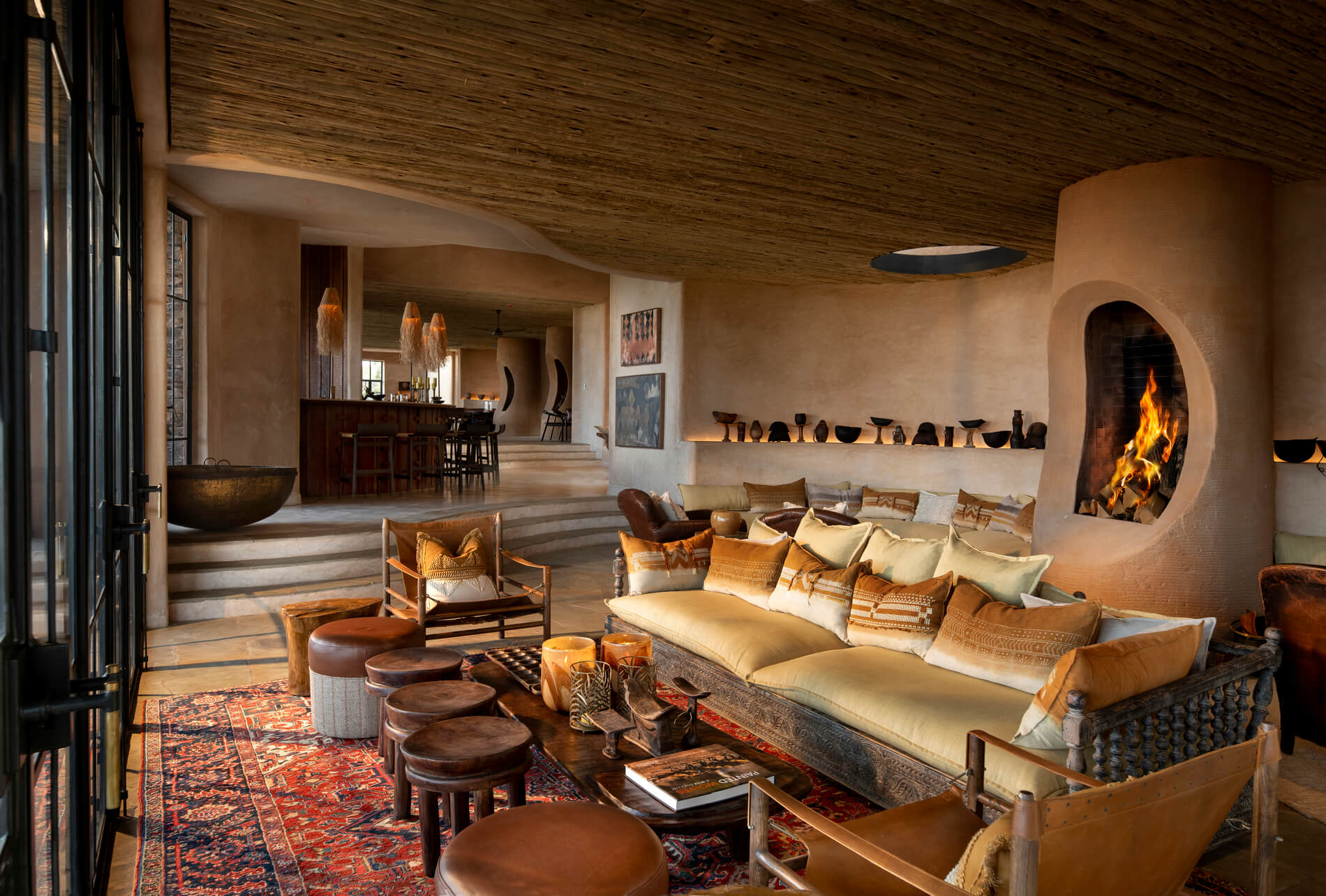
Fox Browne Creative handled interiors with what they call Afro-Wabi-Sabi, a design philosophy that finds beauty in imperfection and honors the hand that made each piece. Walls show their lime-plaster texture. Floors catch light without glare. Materials flow from interior to exterior until the distinction feels arbitrary. The approach celebrates process over perfection, acknowledging human craft rather than pursuing machine uniformity.
The main building functions as both social hub and retreat, with restaurant, bar, and lounge that accommodate all 14 suites comfortably. A map room documents Suyian's transformation from cattle ranch to wildlife corridor. The Black Leopard Room serves as photo editing suite with proper monitors, acknowledging what happens after spending hours photographing rare melanistic leopards: memory cards fill fast and processing thousands of RAW files requires actual equipment.
Locally sourced materials ground the lodge in place. Stone cladding matches surrounding geology. External domes use earth taken directly from the site during excavation. The architecture speaks quietly, confident enough to let landscape dominate rather than competing for attention through dramatic gestures.
.jpg)
.jpg)
Why Melanistic Leopards Draw Photographers to Laikipia Specifically
Bernard cuts the engine and silence follows, broken only by wind through grass. Two male lions lounge 20 meters away, their manes lifting and falling in waves that reveal musculature beneath. Close enough to see whisker detail and hear breathing when wind direction favors us. No other vehicles appear. None will appear because this is sole conservancy access: the wildlife belongs to whoever finds it for as long as observation continues, without time pressure from other groups or guides rushing to maximize species counts.
Morning and evening game drives happen in open 4x4 vehicles stocked with Swarovski binoculars, field guides, drinks, blankets, and hot water bottles for dawn departures when Laikipia's 6,500-foot elevation creates temperatures dropping into the 40s Fahrenheit. Each drive offers choices based on interests and recent wildlife movements: descend into the valley searching for melanistic leopards and river-bound hippos, or climb onto the plateau where lions, cheetahs, elephants, and endangered species congregate around seasonal water.
The conservancy protects over 700 plant species, 325 bird varieties, and more than 100 mammal species, many critically endangered. Grevy's zebras graze alongside plains zebras in mixed herds illustrating evolution's different solutions to survival. Reticulated giraffes, found only in northern Kenya and southern Somalia, browse acacia with coat patterns more geometric than their southern cousins. African wild dogs hunt in packs using cooperative strategies giving them 80 percent kill success rates compared to lions' 30 percent.
But melanistic leopards draw wildlife photographers and serious safari enthusiasts to Laikipia specifically. Since 2019, when photographer Will Burrard-Lucas captured the first scientifically confirmed images of a black leopard in Africa in nearly a century, Laikipia has emerged as the continent's best place to see these genetic rarities. At least five melanistic leopards now roam the region, including Giza Mrembo, the young female remarkably comfortable around safari vehicles who hunts in daylight when most leopards restrict themselves to nocturnal activity.
Melanism results from a recessive genetic mutation in the ASIP gene causing excess pigmentation that makes coats appear completely black from distance, though faint rosette patterns remain visible up close. Only 11 percent of leopards globally are melanistic, most living in Southeast Asian forests where dark coats provide camouflage advantage. In Laikipia's semi-arid savanna and rocky kopjes, melanism offers no evolutionary benefit and might actually disadvantage animals by making them more visible during daylight hunting. Yet these black leopards thrive, with Giza developing unique hunting strategies compensating for her lack of traditional leopard camouflage.
Giza doesn't appear during this visit. Safari wildlife viewing offers no guarantees, and black leopard sightings remain genuinely rare despite Laikipia's concentration representing Africa's highest documented density. But spotted leopards hunt dik-diks in riverine vegetation. African wild dog packs rest between hunting sessions, their social dynamics complex as any primate group. A cheetah mother with three nearly grown cubs teaches stalking technique through demonstration, patience paying off when one cub successfully brings down a young gazelle.
Why Laikipia's Conservation Model Works Better Than Traditional National Parks
What makes andBeyond Suyian Lodge significant extends beyond architecture and black leopards into how it represents a conservation model proving more effective than traditional national park structures. Laikipia's private and community conservancies now protect more wildlife per acre than most government reserves, funded entirely through tourism revenue rather than underfunded park budgets. The model works because local communities benefit directly rather than bearing costs while distant entities capture benefits.
Activities here reflect this integration of conservation and community. Guided bush walks with expert trackers interpret landscapes through signs invisible during vehicle viewing, explaining how broken vegetation reveals elephant passage. Walking safaris put you at ground level where scale and vulnerability change your relationship with wildlife entirely. Horseback safaris across the plateau offer yet another perspective, horses moving quietly enough not to startle herbivores while providing elevation impossible on foot. For serious riders, it's transformative. For photography enthusiasts, camel treks with local Samburu herders who graze cattle alongside wildlife demonstrate coexistence that conservation theory celebrates but rarely achieves.
Night drives illuminate nocturnal species and behaviors invisible during daylight. The conservancy's private status means off-road driving when productive and unlimited time with wildlife when behavior warrants extended observation. Community visits with Samburu and Pokot groups whose land borders Suyian offer insight into how tourism creates employment that makes wildlife protection economically viable. The lodge runs entirely off-grid on solar power, water comes from boreholes, wastewater undergoes onsite filtration and reuse. Over 80 percent of staff come from greater Laikipia region, their employment representing tangible conservation benefits that abstract environmental goals never deliver.
The wellness center, tucked into rocky outcrop, offers treatments using South African skincare company Healing Earth's natural formulations. The two hour Spirit of the Samburu treatment includes traditional foot cleansing with mineral salts, full body exfoliation, a wrap infused with Great Rift Valley clay minerals scented with coffee and cinnamon, then massage timed to afternoon rain drumming on the roof. A plunge pool maintained at 50 degrees Fahrenheit provides contrast therapy after heat exposure.
.jpg)
How Former Cattle Ranch Became Africa's Premier Black Leopard Destination
Suyian Conservancy is owned by the Suyian Conservancy Trust, a Kenyan nonprofit managed under Kenya Wildlife Service approval with oversight from international conservation organization Space for Giants. The land's history matters. For decades, this was a working cattle ranch where livestock and wildlife competed for grazing and water in dynamics benefiting neither. Human wildlife conflict was constant: predators killed cattle, ranchers killed predators, herbivores competed with livestock for grass. Everyone lost economically and environmentally.
The transition to conservation focused landscape management happened gradually over decades, requiring buy-in from neighboring communities whose livelihoods depend on successful land use rather than abstract conservation ideals disconnected from economic reality. Today, limited cattle grazing continues alongside wildlife protection, creating what ecologists call a biodiversity corridor connecting Laikipia's various conservancies and allowing animal migration along routes existing for millennia. Tourism revenue funds community development projects through andBeyond's partnership with Wild Impact, ensuring conservation creates tangible benefits for people living alongside protected areas who bear costs of human wildlife conflict.
To reach andBeyond Suyian Lodge, most guests fly from Nairobi's Wilson Airport to Loisaba Airstrip, a 55-minute flight landing you in different Kenya entirely from the capital's urban intensity. From Loisaba, it's an hour's drive assuming elephants don't cross the road, which they will. Laikipia's elevation averaging 6,500 feet creates temperatures ranging from high 40s Fahrenheit at dawn to low 70s by afternoon, altitude providing natural cooling despite equatorial latitude. Kenya experiences two rainy seasons: long rains April through May, short rains in November. July through October offers optimal wildlife viewing with dry conditions concentrating animals around water. December through March provides good weather and excellent birding.
This is Kenya for travelers who have done the Maasai Mara migration circuit and want something more nuanced than guaranteed spectacle. andBeyond Suyian Lodge delivers design sophistication without pretension, wildlife viewing without crowds, and access to species drawing serious wildlife enthusiasts rather than safari first timers checking boxes. The property works best for guests comfortable with uncertainty, who understand you might see Giza hunting at dawn or might not see her at all, but either way you'll experience genuine wilderness in a conservancy where tourism hasn't eroded wildness into performance. And you'll do it from suites where architecture recedes into landscape and 44,000 acres stretch in every direction with only the animals who actually belong there.