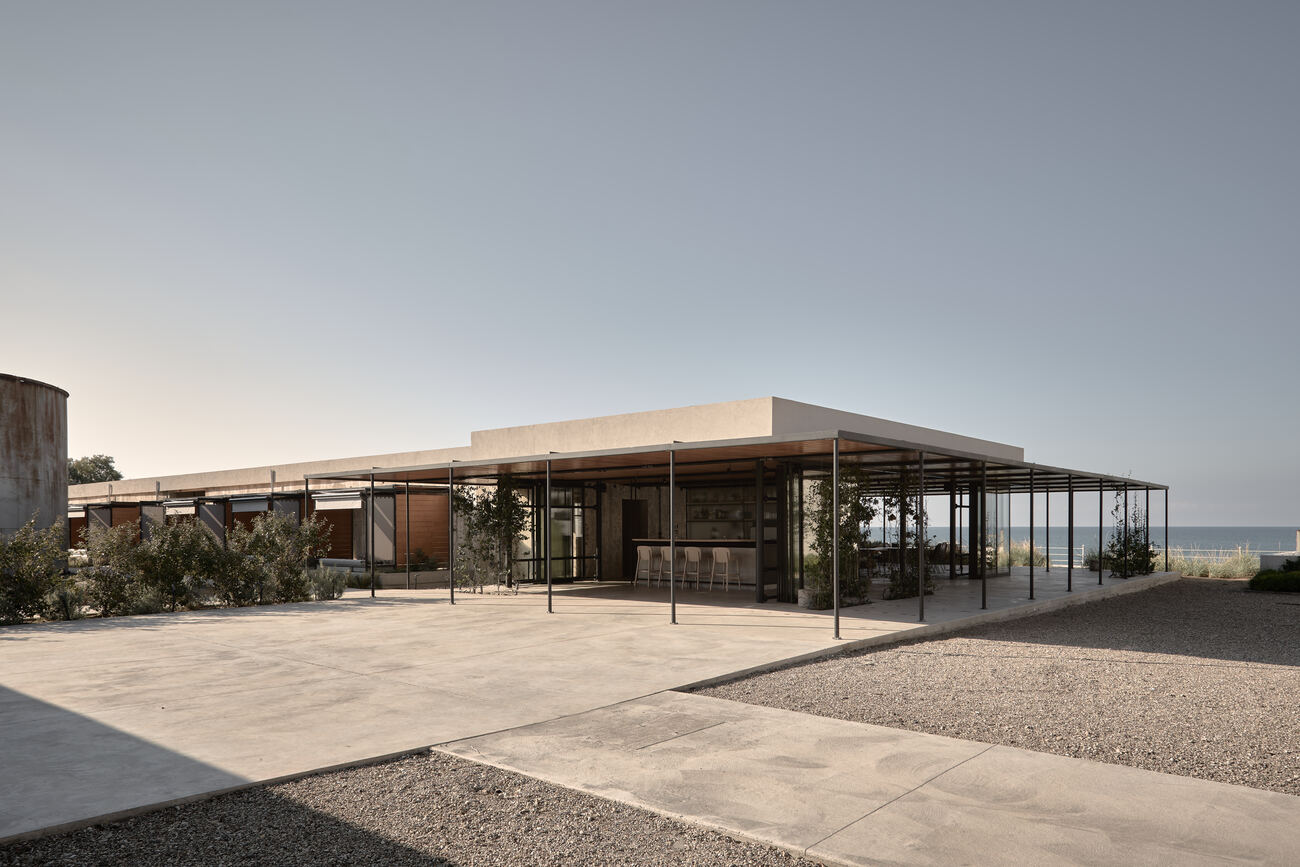
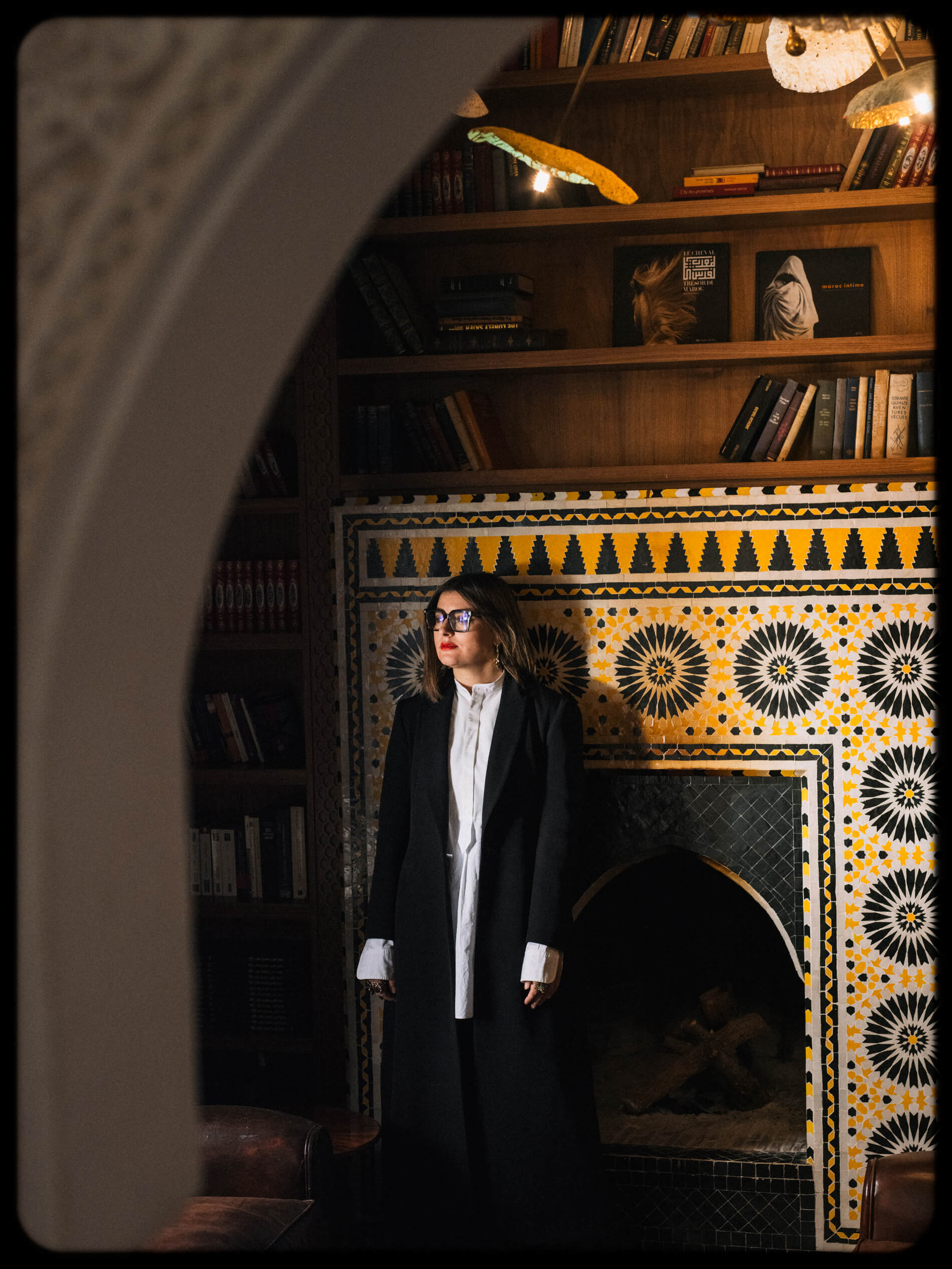
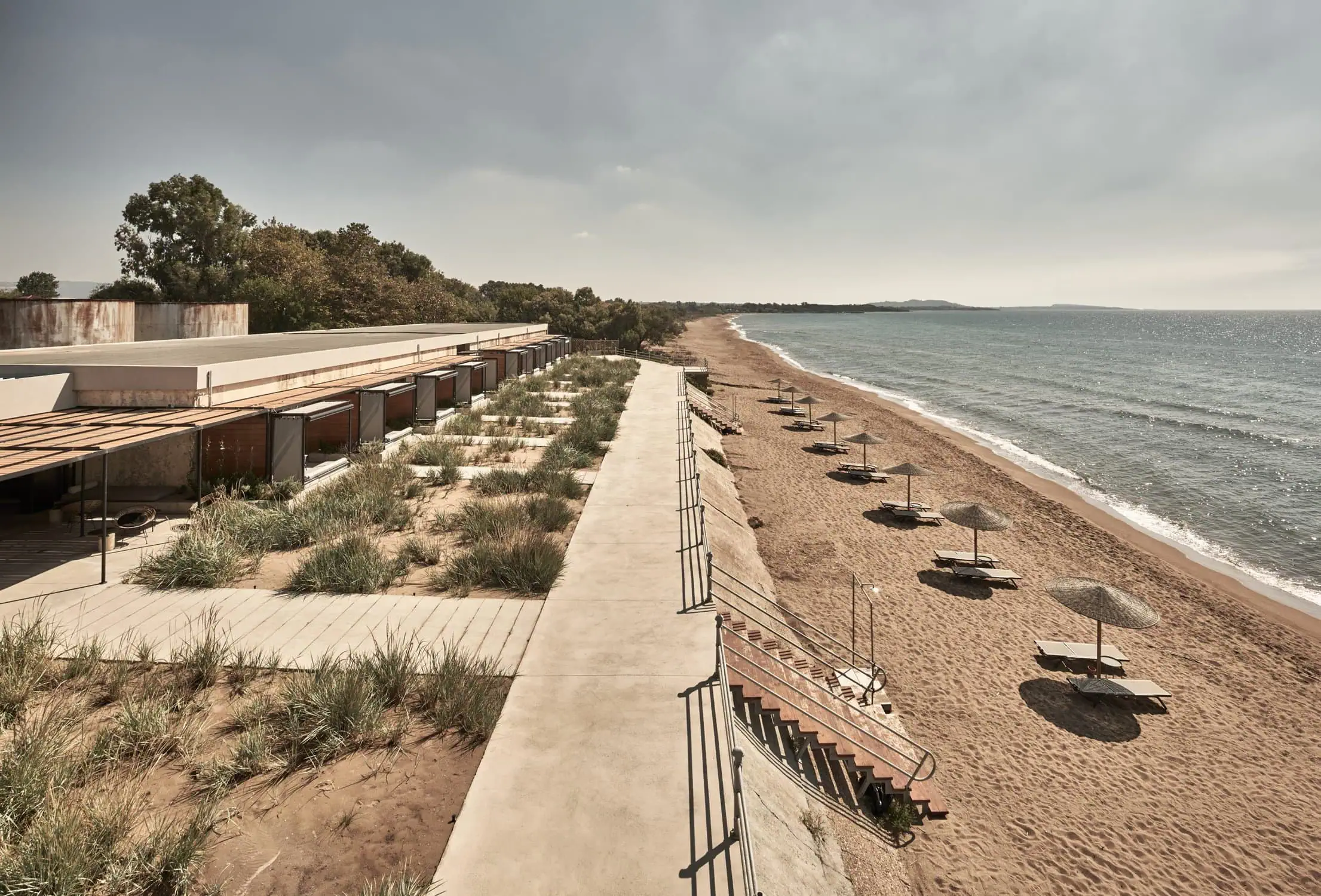
Karaflos was born in 1987 in Savalia, a village near this coast. The abandoned winery at Kourouta was part of his world growing up, significant enough to register as a landmark even in its silence. At school, his history teacher set the class an assignment: research the local economy, find the people who lived it. Karaflos chose the winery. He tracked down the former workers and sat with them and listened. He came away with their stories in his memory: the golden era of the black currant trade, the phylloxera plague that devastated French vineyards and made this coastline briefly prosperous, the collapse when French vines recovered and demand fell, the government response that built wineries across the region to convert the overstock into wine, this building placed right at the water so the product could be pumped directly onto ships. His family bought the property not long after. He was fifteen.
"I always knew about the history of this place. It was actually a landmark, a very significant building. My family bought the place when I was fifteen, but I already knew the history of it. Having that knowledge, I felt that it was my duty to preserve the history and let the buildings tell the story instead of demolishing it or building something new. It doesn't make sense."
It doesn't make sense. The phrase lands differently from how most founders talk. Not: I had a vision. Not: I saw potential. The demolition simply did not make sense to someone who understood what the building held. Duty and logic arrived together in a fifteen-year-old who had just interviewed the workers, and they never left. What Karaflos did next is the detail that changes how you understand everything that followed. He did not study hospitality. He went to the National Technical University of Athens and studied electrical engineering and computer science, choosing the school deliberately, he says, to broaden the way he thinks. Six years of one of the most demanding technical educations in Greece. Then military service. Then he came back to Elis, joined K-studio architects as a manager, and began developing the project. The first masterplan was drawn. Everything was in place. Then Greece collapsed. The financial crisis stopped the project entirely. Karaflos sat with the vision, the land, the drawings, and a country in economic freefall. He had doubts, he says plainly. He does not dress it up. But he did not let go. When he felt safe again, he turned back to the initial vision. He wrote the operating model from scratch, the food philosophy, the staffing, the cultural programming, the approach to the building itself. No playbook existed for what he was attempting. He made one. He calls himself an Imagineer, his own word, imagination and engineering compressed into one, and it describes exactly the discipline Dexamenes required: holding a creative vision and a structural problem in the same mind simultaneously, refusing to let either win at the expense of the other.
When the construction began, every wine tank presented a different problem. The walls of each had aged differently, settled differently, responded to the work in their own particular way. Thirty-four tanks. Thirty-four individual solutions. He was there when the first block of concrete came out. Something shifts in how he speaks at this point, a slight slowing, as if he is going back there. It was a very emotional moment, he says, because he felt like stepping into the history. Then the light came in. A space sealed for a century, that had held wine in darkness and then held nothing in darkness for decades more, suddenly open.
"It was like a blind box that was for one century old in the darkness. Suddenly it was flooded with light."
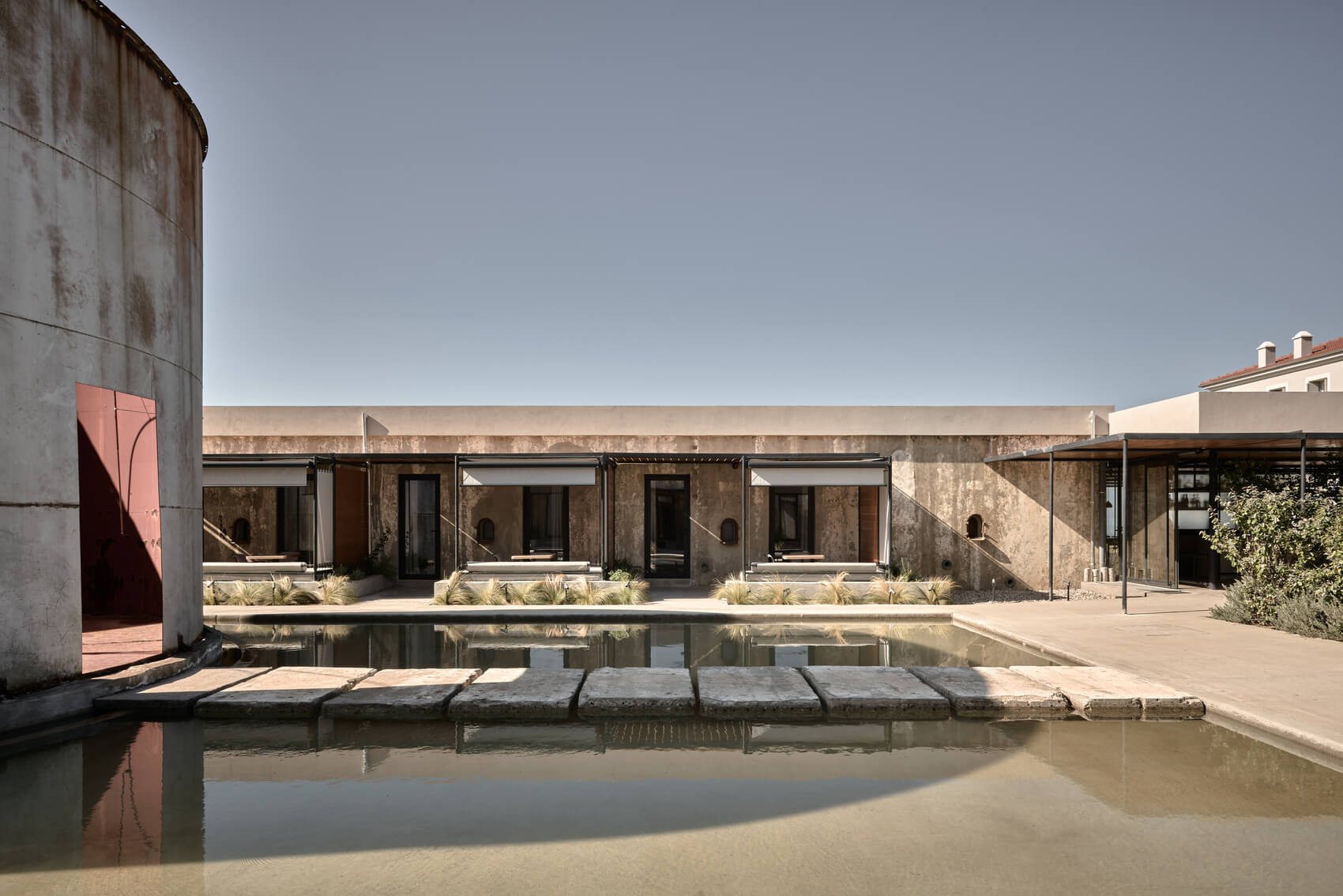
The concrete removed in the cutting was not taken away. Coffee tables. Stepping stones in the courtyard. The cross-sections of stone embedded in the walls, French-imported beton arme and one of the earliest uses of reinforced concrete anywhere in Greece, were revealed by the cutting and resembled terrazzo. Karaflos had a piece analysed and a matching terrazzo code developed. The floors of Dexamenes are made from the material of its own walls. French guests arrive and recognise the manholes, the pipes, the construction method. They tell him: we have the same in France.
More than ninety percent of the staff are from this region. Some left Elis and came back specifically for these jobs. They are the best ambassadors, Karaflos says, not just of the hotel's values but of the history of the region, and it was a great opportunity for them to return to their homeland. When a guest asks about the wine or the building or the coast outside, they are asking someone who grew up knowing the answer. That quality of knowledge cannot be imported or trained. Karaflos built around it. The kitchen follows the same logic. Before any menu is written, the team drives out into the farmland surrounding Elis and finds the farmers directly, the new generation of growers working the soil consciously. They find out what is ready and what is coming. Then they come back and write. The process goes with the research first, Karaflos explains, and setting up the menu comes after. When tomato season arrives, the kitchen buys for the immediate dishes and keeps buying. Cans, jams, pickles, paste. August carries through to October. Zero waste is not just a necessity, he says, but a source of inspiration. The seasonal abundance, taken seriously, becomes the food.
The restaurant is dex.Machina, named for the engine room it occupies, where the machinery once drove the whole operation. Chef Gikas Xenakis runs the kitchen from the space where wine was once loaded onto ships. The wine list runs to more than one hundred and fifty labels, almost all Peloponnesian. The region holds more indigenous grape varieties than anywhere else in Greece, and its wines remain dramatically undervalued by the international market. Three tasting experiences are available at the hotel. Winery visits through the surrounding countryside can be arranged. A performative tasting was once produced in collaboration with four local wineries, blending contemporary art with viticulture, staged inside the silos themselves. Wine was always going to be central to Dexamenes because wine is what this building was made to produce, and Karaflos keeps finding new ways to honour that original purpose. The two silos in the courtyard were never converted into rooms. They stand open to the sky, their rusted forms reflected in the shallow pool around them, available for dinners, performances, and art installations. They did not need to be rooms. Karaflos understood that. Minimum intervention. Listen to the building. Add only what is necessary.
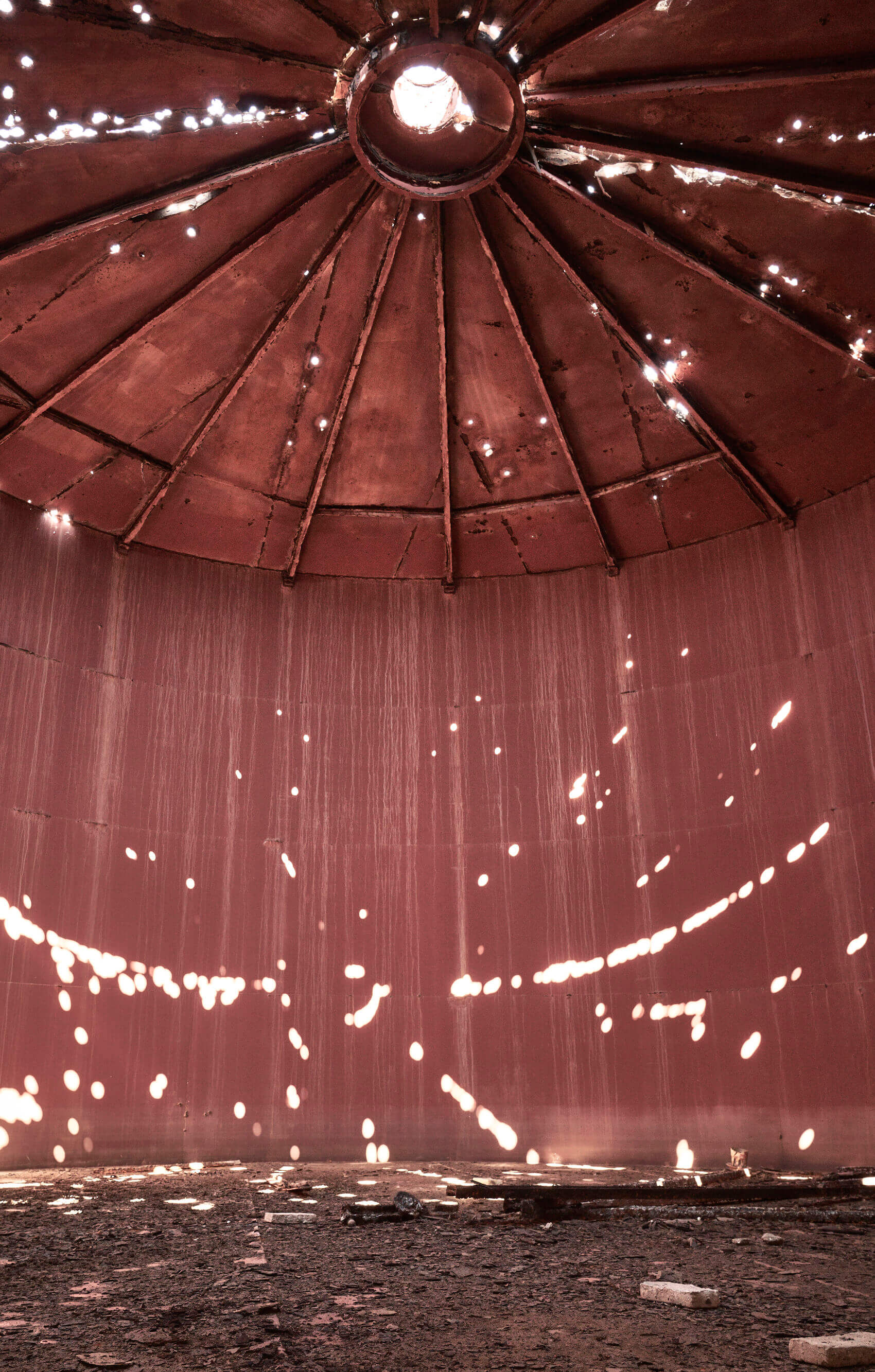

What Karaflos has built at Dexamenes sits at the leading edge of something larger happening across European hospitality. A generation of founders is working against the model that dominated the last century, which said: find a site, clear it, build something profitable that could exist anywhere. That model produced hotels without memory, without obligation to the place they occupy. The counter-movement finds what is already standing, listens to it, and gives it a reason to keep standing. Dexamenes is one of the most complete expressions of this thinking anywhere in the world, not because Karaflos set out to represent a philosophy, but because he had no other choice available to him. The building carried too much history. The obligation had been there since he was fifteen. Some things are not passion projects. They are the only thing a particular person, in a particular place, at a particular moment in time, could possibly have done.
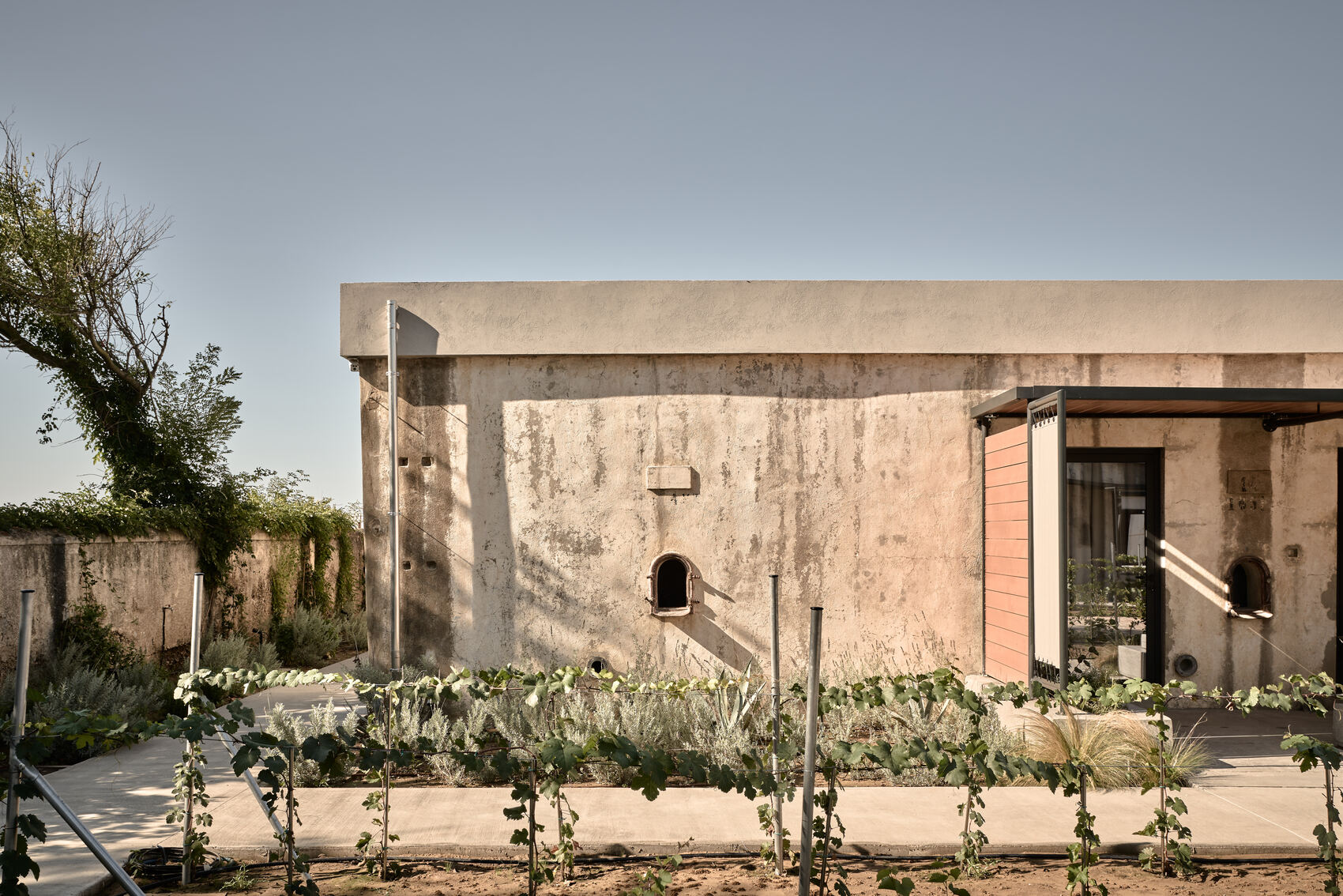
"For me and the team here at Dexamenes, showcasing what the region can offer is one of our biggest elements that brings us happiness and keeps us motivated."
Not the awards, of which there are now many. Not the coverage. The showcasing. The act of presenting this particular corner of Greece, its farmers and its wine and its ruins and its coast, to people who had never thought to come here. He splits his life now between Athens and Kourouta. Two children. The hotel is running. The book he wrote from scratch is working. He is still, in the manner of people who feel obligation deeply, thinking about what comes next. At dex.Machina that evening the engine room holds the warmth of the day. The wine is Peloponnesian and excellent. The waiter grew up three kilometres from where he is standing. The stepping stones in the courtyard outside were once the walls of the room someone is sleeping in tonight. Everything here came from something that was already here. Nothing was demolished. Nothing was imported. A boy who grew up on this coast, who collected the stories of the men who built this place, decided that was the only way it could be done.
He was right.