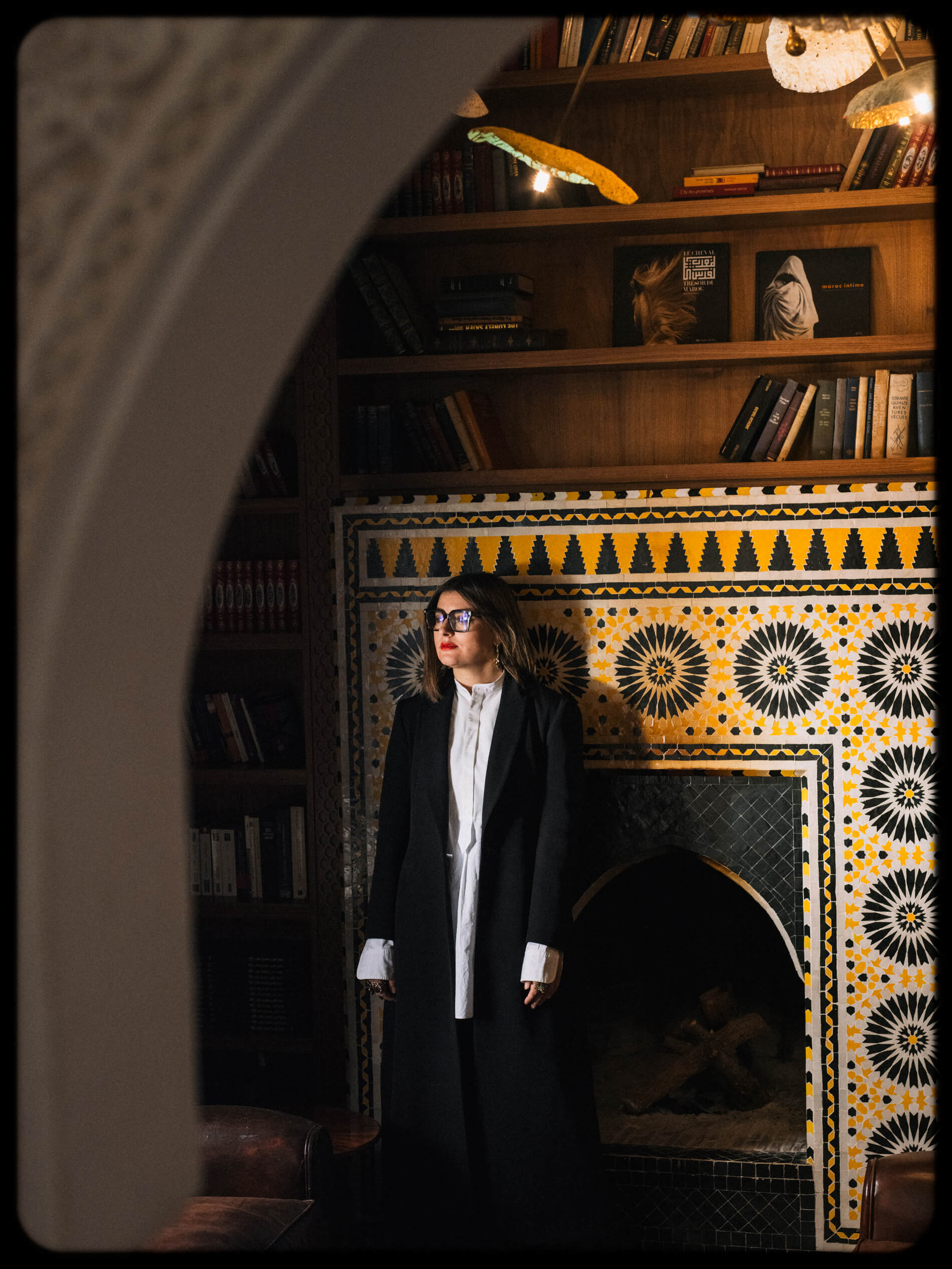
The story of how he entered it is specific enough that it sounds invented. It is not.
In 2005, Karim Irrgang was a waiter in Munich. He was working in food and beverage, young and junior, and one afternoon a friend invited him along to a birthday party. Before the party, they stopped at a bookshop. His friend went to find a specific title. Karim wandered into the travel section.
He found a book called The 100 Best Hotels, compiled by a German writer, filled with photographs of properties from Bora Bora to Los Angeles to Bangkok. He bought it without thinking much about it. That evening, back in his flat, lying in bed, he turned the pages slowly and something happened that he still describes with the same clarity two decades later. He saw himself inside those buildings. Not as a guest. As someone who belonged there.
The next morning he sat down at his laptop and wrote his CV. It was, by his own description, very basic. He had no relevant qualifications. No connections. No track record. What he had was a single clear paragraph explaining where he wanted his career to go and the nerve to say so directly to a hundred strangers. He printed the CV and a motivation letter. One hundred copies. He walked to the post office and sent them to one hundred hotels around the world.
A few months later, he was living in Bangkok.
“Those six months became twenty years. I left with two suitcases. Now I have a wife, two kids and a forty foot container.”
The trajectory from that Munich post office covers more ground than most people manage in a lifetime. Banyan Tree gave him his first position, a trainee role in Thailand, and over the following seven years he rose through their properties in the Seychelles, Morocco, Australia and the UAE to become hotel manager. From Banyan Tree he moved to Cheval Blanc Randheli in the Maldives, a property with only fourteen villas, where the scale of the operation matched the intensity of the service in a way that marked him permanently. It was at Cheval Blanc that he learned what fourteen rooms could feel like when every single interaction was personal. Then came D Hotel Maris in Turkey. Then back to Banyan Tree. Then Marrakech, and El Fenn, one of the Medina’s most established riads, where he served as General Manager and led its expansion into thirteen interconnected buildings across a two acre site.

Then IZZA.
What brought him here was not a career move in any conventional sense. His wife is from Marrakech. The city was already home. But something else was at work, something philosophical, and it surfaces whenever the conversation moves from IZZA specifically to the state of hospitality generally.
“I think nowadays hotels are number driven. They’re not about guests anymore. Not that much. Guests start to be more and more just a number, or a member in your members club. Points. And it’s not anymore about Miss and Mrs Smith who are coming in, where you want to create something special for them.”
There is a word he returns to, and it is not luxury or excellence or service. It is memory. What the guest carries home. What they talk about over dinner six months later. What makes them come back.
“I see it as a danger,” he says. “But on the other hand, I see it as an opportunity. Because I truly believe that tourism will change back to those basics where it’s all about the guests, about the experience, about memories. And that is important.”
Memory, in Karim’s understanding, is not a marketing concept. It is not a Net Promoter Score. It is the specific recollection of a specific person in a specific place: the way the light fell on the courtyard at breakfast, the name of the guide who took you through a door you would have walked past, the taste of a juice you had never encountered before and cannot find at home. Fourteen rooms make this possible because fourteen rooms mean Karim himself is in the building every day, knows every guest by their second morning, remembers what they ordered and where they are going and what their children are called.
He tells a story about guests who visited a few weeks before. When the time came to leave, they cried. Not because something had gone wrong, or because they were vulnerable, but because the connection had been so personal that departure felt like leaving a friend’s house rather than settling a hotel bill. They sent photographs of their stay afterwards. They are already planning their return.
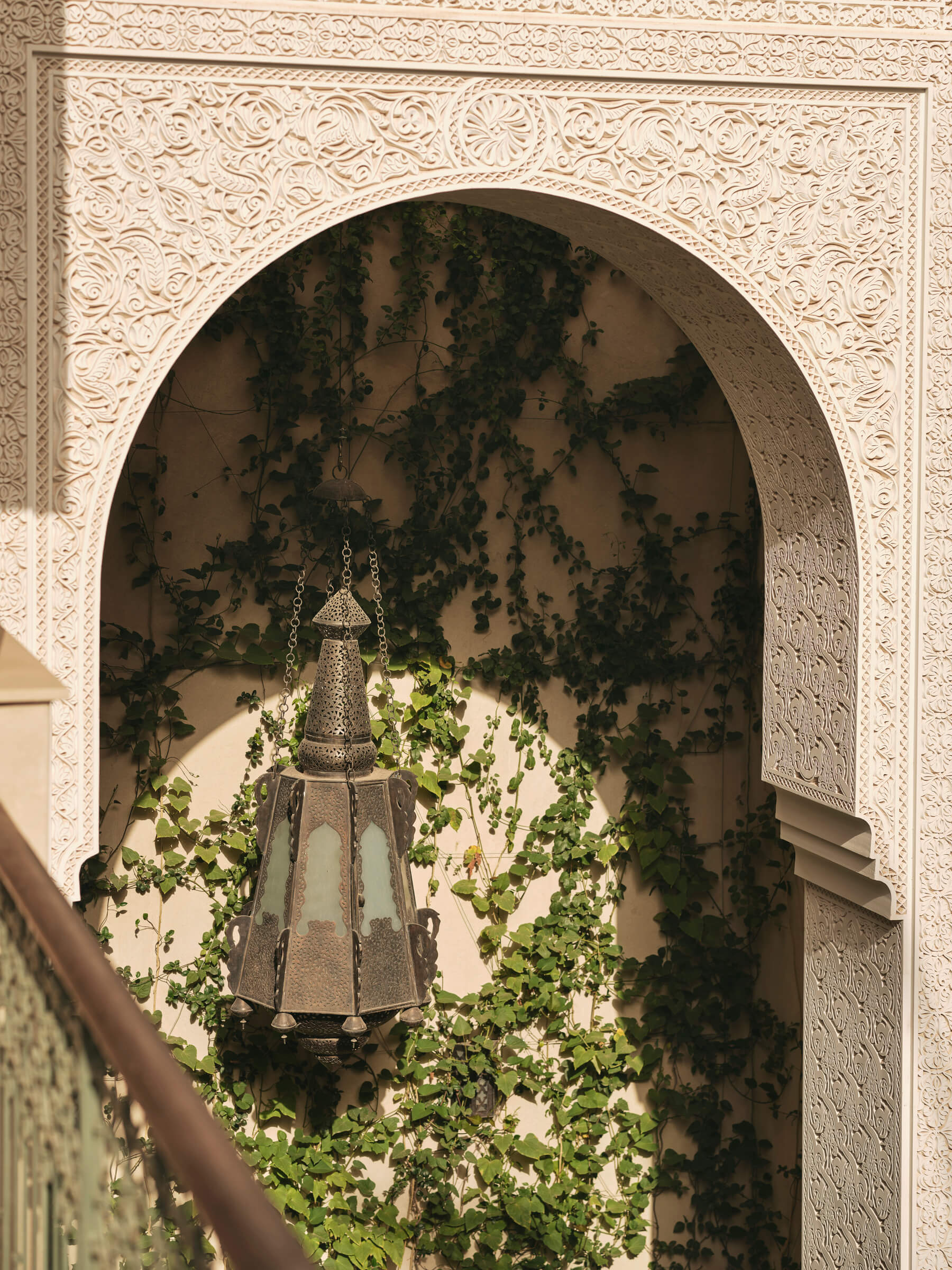
This is what an all Moroccan team achieves that a rotating international staff does not. Every person who works at IZZA is from here. They speak the language of the Medina, literally and culturally. They know which guide will unlock a door that others walk past. They know the families who live in the surrounding streets, the artisans who carved the plaster in the third courtyard, the woman at the market who sells the best oranges. Karim is the only exception.
“I’m the only foreigner in the team,” he says. He pauses, then adds with something close to a grin: “Although I feel already Moroccan.”
The food at IZZA follows the same principle. Moroccan at its foundation, with what Karim describes as a European twist. Not fusion, which implies two cuisines forced together, but a kind of literate comfort. A guest from London or Berlin can order a classic gin and tonic if they wish, but there is also a juice that Moroccans drink at breakfast and tourists never encounter, a pastry that belongs to this city and no other, a preparation that could only come from this kitchen in this quarter of the Medina. The rooftop restaurant Noujoum, named after Bill Willis’s former house Dar Noujoum, which translates to stars in Arabic, serves a menu of Mediterranean dishes woven through with Moroccan flavours. It is the kind of cooking that only makes sense here. Which is the point.
The hotel’s social commitments are equally specific. IZZA works with the Amal Center, a cooking school for underprivileged women in Moroccan society where participants learn professional kitchen skills that can lead to employment. Trainees from the Center also come to work in IZZA’s own pastry kitchen and main kitchen, learning alongside the hotel’s chefs. But the relationship runs in the other direction too. Rather than offering a curated cooking class in their own kitchen, with their own chefs and their own branding, they do something more uncomfortable and more honest: they send guests to the Center itself. The women there teach the cooking. The guests eat what they make. They see what the organisation does on a social level before they taste anything. They leave understanding something about Marrakech that no rooftop dinner can provide.
“I truly believe we have a great responsibility towards our environment. Social and nature. When we open hotels, we are often in secluded places. Islands, forests, deserts. There are people already living there. There is already an ecosystem. It’s our responsibility to be part of it. Not to overtake it.”
There is a moment, late in the conversation, when something sharpens. The warmth stays but the precision increases. He is no longer talking about IZZA. He is talking about a disease he has watched spread through the industry for twenty years, from the inside, with increasing frustration.
“I have difficulties when I go to a hotel and everything is good. Everything is nice. The room is very sexy. Everything is good. But outside, the name is called Hotel ABC. And tomorrow if you remove ABC and call it DEF, it’s basically the same. That’s where we go wrong in hospitality.”
He remembers hotels from childhood. Places with identities so particular they are still recognisable today, decades later, because they never traded character for a brand manual. He remembers when hospitality meant something specific: a person, a place, a feeling that could not be replicated anywhere else. He believes the industry abandoned that, slowly, in favour of scalable systems and revenue management and the language of optimisation. He believes it is coming back.
“I left the corporate world because I’m doing this job because I truly believe in hospitality being a face to face thing about creating memories.”
On the rooftop at Noujoum, the late light turns the Medina the colour of terracotta and dust. The Atlas Mountains hold steady on the horizon. Below, somewhere in the tangle of streets and centuries, a call to prayer begins and the city answers it the way it has answered it for a thousand years. IZZA is quiet in the way that only fourteen rooms can be quiet: not empty, but held.
Karim Irrgang sent one hundred letters to find this industry. He crossed four continents to understand it. He came to Marrakech because his wife called it home, and he built something here that the rest of the world, slowly, reluctantly, is starting to remember it needs.
Fourteen rooms. One foreigner. A house of friends that means exactly what it says.