The One Thing You Need to Know
The problem with luxury travel isn't luxury itself. It's that people assume luxury means golden chandeliers, crystal champagne glasses, expensive for the sake of expensive. The Newman proves that's wrong.
Luxury here is memory. Stay once and they remember you prefer a certain wine. Stay three times and they know your room preference, your view, the way you take your coffee. You stop thinking because the staff already thought about it for you. That's what real luxury feels like.
The hotel was built for Fitzrovia first, guests second. Most hotels talk about community engagement but then dictate what the community should want. The Newman spent five years walking the neighbourhood, researching the history, understanding the characters who lived here, asking what was missing. Then they built exactly that.
Their tagline is "meet your new old friend." We understood it within hours. The hotel is new, shiny, fully functional with every modern convenience. But it feels like it's been part of this street for a century. It doesn't want to feel exclusive. It wants to feel familiar.
Arrival and First Impressions
Fitzrovia doesn't announce itself. Neither does The Newman. The neighbourhood sits between louder London identities—creative but grounded, residential but alive. Walking from the Tube, we passed offices, production companies, cafés, pubs, and people who clearly live here rather than just visit. We recognized the same faces on our second morning walk.
Arriving felt like stepping into the neighbourhood's rhythm rather than escaping it. The welcome was immediate and calm. There's no reception desk performance, no hierarchy. We sat down in a space that smelled of botanicals and burning wood. Check-in happened like arriving at a private home.
What struck us immediately was how embedded the hotel already felt. We overheard nearby coffee shop owners talking about events they'd attended here, invitations they'd missed but would catch next time. For a hotel open mere weeks, that level of neighbourhood adoption felt extraordinary.
The first event The Newman hosted wasn't for press or influencers. It was for neighbours. Locals came together, many meeting each other for the first time despite passing on the same streets for years. One told us they'd lived in Fitzrovia for four decades and had never felt this kind of connection. That's when we understood what the hotel was actually trying to do.
Design Rooted in Fitzrovia, Not Trends
The design doesn't try to impress. It tries to belong.
Rather than importing a global luxury aesthetic, every detail roots itself in Fitzrovia's history. The design team walked these streets for months, researched the characters who lived and worked here, studied the architecture of neighbouring buildings, absorbed the neighbourhood's identity. Then they translated all of it into interiors.
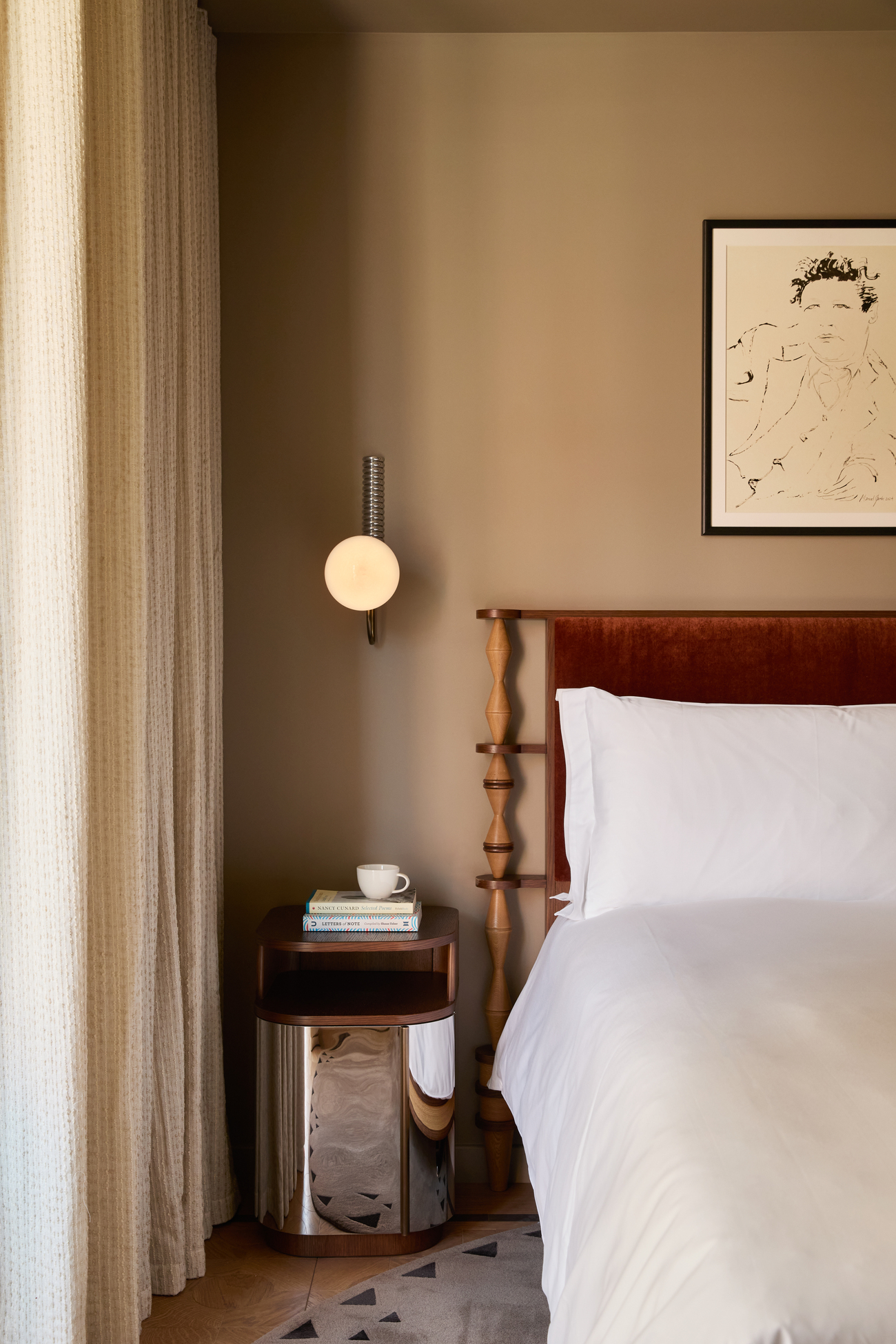
Nancy Cunard appears throughout. The poet and socialite wore chunky African-inspired bangles in the early 1900s, and those shapes became the bed posts in our room. She wore hats with striking geometric triangular patterns, now woven into rugs and featured in a dramatic ceiling art piece at reception. Virginia Woolf inspired naming choices—Talon for the event space, Angelica for the brasserie.
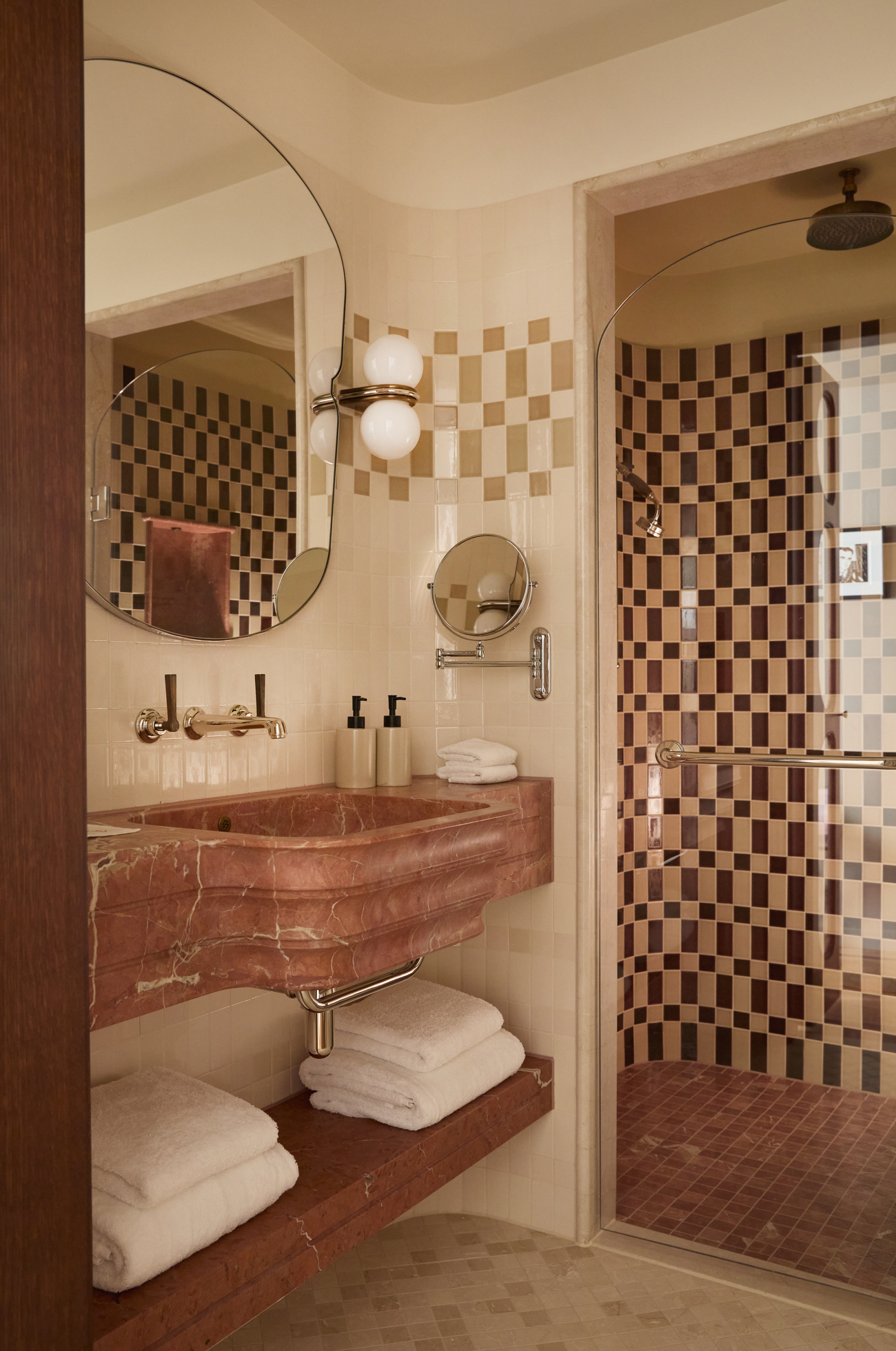
The marble sink in our bathroom was carved from a single piece, its curved design inspired by the balconettes on Shropshire House's façade down the street. In the penthouse suites on the sixth floor, fossils are embedded in the marble. Millions of years of geology inside a central London bathroom.
We counted twenty-nine different natural materials as we explored. Reclaimed wood. Belgian bluestone from one of only four remaining colonial-era suppliers in Bali. Hand-carved limestone. Petrified wood. Copper wrapping the bar downstairs. Every material tells a story about place or time or craft.
Nothing felt forced. We discovered details slowly over three days—the way light hit certain textures at different times, the warmth of wood against cool stone, the way spaces flowed without obvious transitions. The hotel understands scale, both architectural and emotional, and you feel it everywhere.

The Rooms and Accommodations
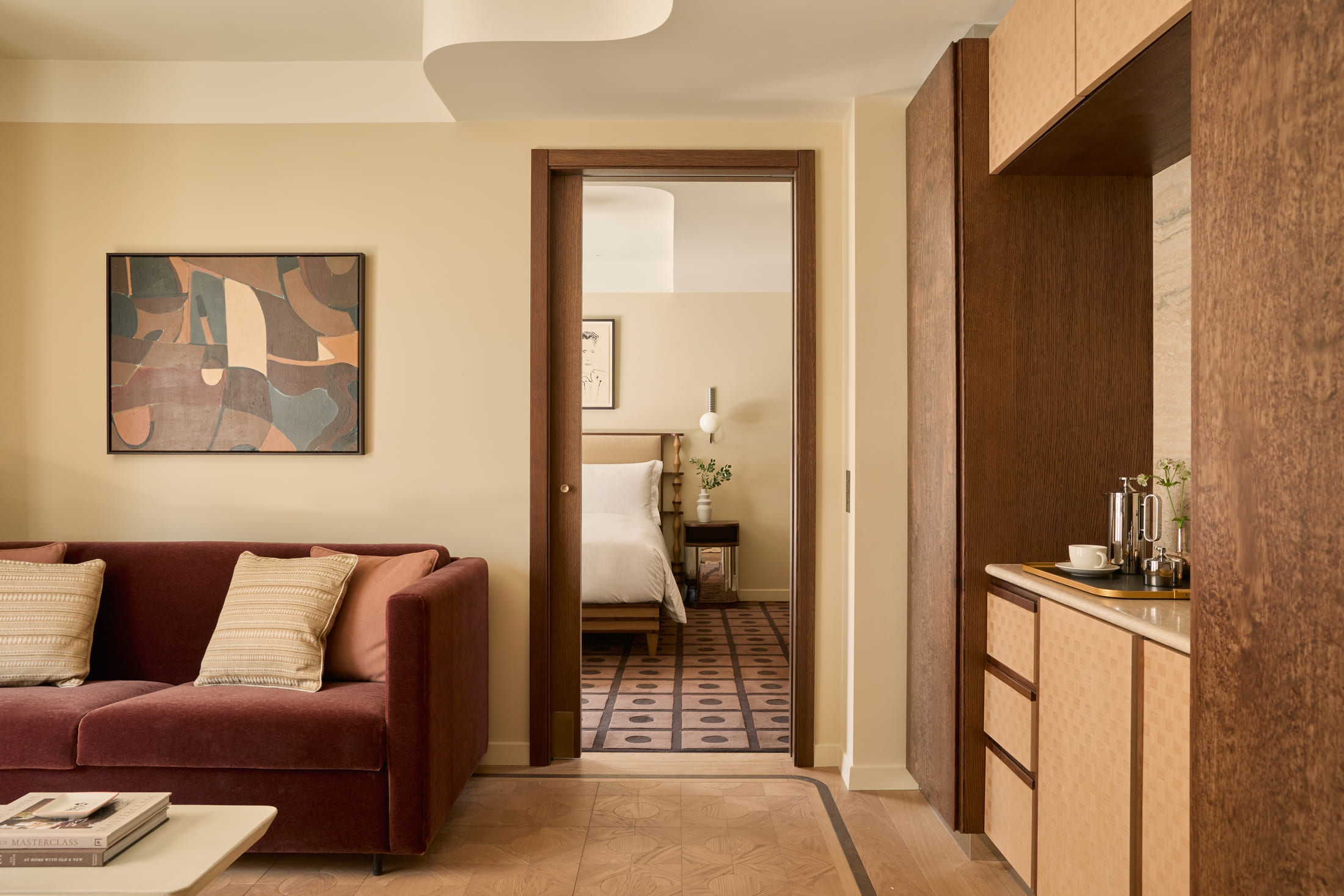
The rooms are exceptional. Calm, generous, deeply comfortable. The layout felt intuitive immediately. Storage was genuinely well considered—rare in London hotels where space fights against design. Lighting was soft and flattering, particularly in evening when the city outside felt relentless.
The bed deserves emphasis. The organic Natramat mattress topper is noticeably thick, exceptionally soft, somehow both supportive and cloud-like. We have the same mattress at home, so we recognized the quality the moment we lay down. We slept deeply here. The kind of rest that reminded us how much better we function when our bodies actually switch off.
The pillow menu offered nine options. We chose medium-firm and slept through what should have been construction noise from nearby building work—we never heard it. The soundproofing is extraordinary for central London. Floor-to-ceiling windows let natural light flood in without bringing the city's chaos with it.
Our bathroom followed the same philosophy. Strong water pressure. Solid materials. Mirrors that didn't interrogate. Products that felt genuinely chosen rather than branded—Cloris CBD sleep aids and Anatomé wellness products in the minibar alongside organic teas and mushroom coffee. Everything worked exactly as it should, which remains surprisingly rare in new hotels.
The book curation surprised us. Each floor has different selections: one about old Fitzrovia or historical characters who lived here, paired with a new book about contemporary London walks or hidden neighbourhoods. Someone thought deeply about what happens after you check in and unpack.
A yoga mat sat rolled in our room. The TV included an Earth and Sky subscription for in-room yoga and Pilates classes. Wellness wasn't confined to one floor. It was distributed throughout our entire stay.
The signature suites on the sixth floor are named after female medical pioneers who worked at the nearby Middlesex Hospital. Elizabeth Garrett Anderson, one of the UK's first female practitioners. Florence Nightingale, whose penthouse features a six-person sauna, brass monkey plunge pool, and uninterrupted views across London toward the BT Tower. Contrast therapy at sunrise, 70 meters above Fitzrovia.
We settled in quickly. Unpacked completely. Slowed down without trying. Eventually stopped thinking about the room entirely, which is the highest compliment.
Gambit Bar: Descent Into Fitzrovia's Occult Past
Gambit became the soul of our stay.
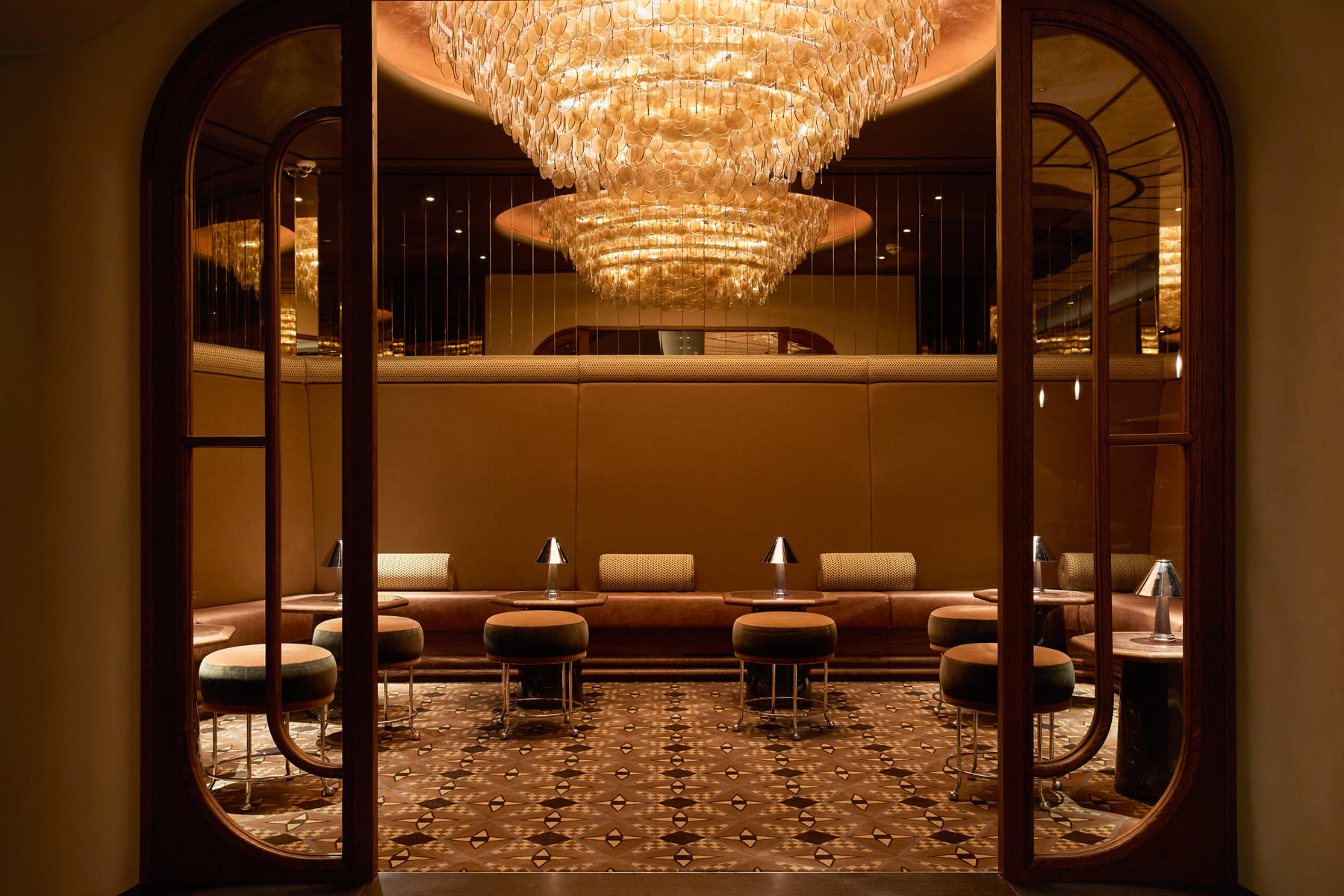
You descend below street level through a glass tunnel. The transition feels deliberate, almost symbolic. Your routine stays at street level. Massimo, the bar manager, designed it to feel like walking into another dimension. We understood immediately what he meant.
The floor caught our attention first. Symbols from Thelema, the religion Aleister Crowley invented in the 1920s, are embedded throughout. Crowley was a prominent Fitzrovia figure during that era, deeply involved in occultism, black magic, esotericism. The bar's entire color palette and line work reference the retro aesthetics of that occult period. It's esoteric design without being theatrical. Details reveal themselves slowly, not immediately.
We chose a booth. Seating is designed for conversation, not turnover. Lighting feels warm and human. Music matters here—not as background noise but as identity. We felt the bass in our chests without it overwhelming conversation.
The cocktail program impressed us immediately. Every drink has a non-alcoholic version that genuinely replicates the flavor profile. We tried both versions of the house negroni. The complexity and depth matched without alcohol's heat. It's not a token gesture. It's a parallel menu treated with equal seriousness, reflecting a broader philosophy about wellness extending beyond the spa floor.
Massimo told us his story over our second visit. He grew up in a bar in northern Milan. His family ran it for decades. He remembers running between tables as a child, remembers his family opening on Christmas Day just to share bubbles and dessert with neighbours walking past. The Newman reminded him of that community spirit. When he talked about wanting locals to know him by name and him knowing theirs, we believed him entirely.
The partnership with Gibson guitars happens twice a month. Local musicians, many still emerging, get a stage here with professional equipment provided. The bar isn't manufacturing a scene. It's supporting one that already exists.
Dogs are welcome. We watched locals and hotel guests sit side by side without distinction. Conversations overlapped naturally. It felt like a bar Fitzrovia had already claimed as its own, which for a space open mere weeks felt remarkable.
Brasserie Angelica: The Restaurant That Happens to Have a Hotel
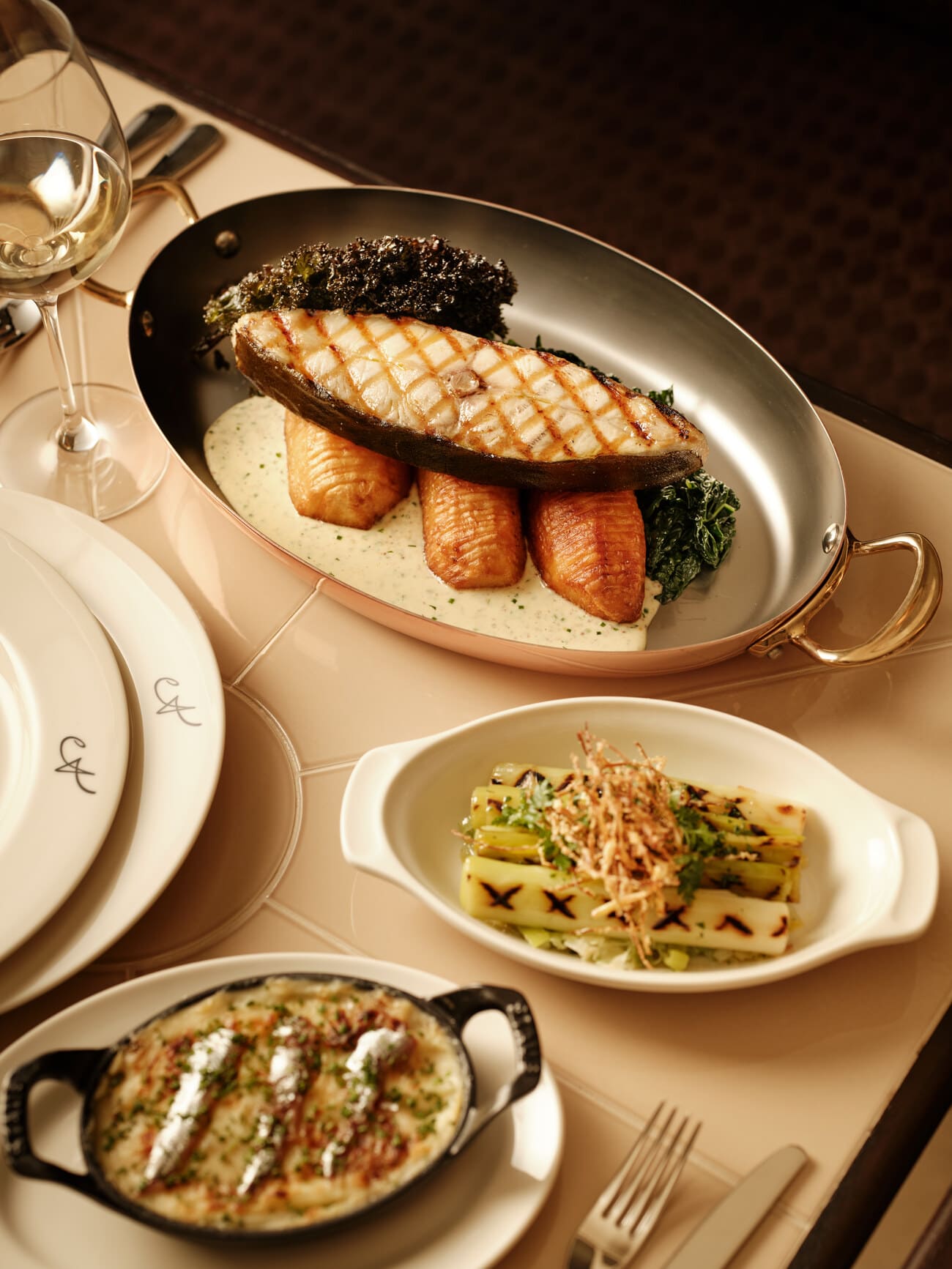
Brasserie Angelica has its own entrance. Its own identity separate from the hotel. The head chef was direct when he explained the vision: he wanted people discovering the restaurant to look around and say "oh, there's a hotel here?" rather than hotel guests saying "oh, that's the restaurant." That's bold positioning in a city where hotel restaurants struggle for neighbourhood credibility.
Walk-ins are sacred here. We noticed tables always stayed available for people coming off the street, even during peak service. That's fundamental brasserie philosophy, but also specifically Fitzrovian. The place should be there when you need it, not something you plan around.
We spotted the smørrebrød trolley at lunch. Open sandwiches—Scandinavian-style, thoughtfully composed, quick to eat but genuinely healthy. It's a specific answer to a specific neighbourhood need: office workers who want quality food fast without fast-food compromise. The trolley moves through the dining room. People point. They eat. They leave. Brilliant in its simplicity.
The head chef explained his produce philosophy over dinner. One salad arrives by bicycle from an organic grower. Everything in that dish is grown consciously, eaten consciously. He admitted openly they can't do it for every plate because of cost, but they're planting the idea. The respect chain runs: environment, producer, customer. They're building toward a future where that's standard, not exceptional.
We tried the Josper-grilled steak. The flavor was distinctive, smoky in a way other equipment can't replicate. The menu features brasserie classics—steak frites, tartare, great salads—but executed with genuine care. Lighter Scandi-inspired touches appeared throughout: pickling techniques, fermentation, vegetables treated as seriously as proteins. The desserts and viennoiserie came from an in-house pastry team whose work we saw stacked beautifully in the open kitchen at breakfast.
The menu reads, as the chef described it, like "an old friend and a new acquaintance." We knew what we were ordering, but it was better than we expected. Every time.
The atmosphere felt buzzy without being forced. We heard it from the hotel lobby before we even entered. Floor-to-ceiling windows open to the street. The corner location gives the restaurant visibility and presence. The terrace will be packed by spring. It feels alive, not designed to look alive.
The Wellness Floor: London's Rarest Luxury
Few hotels in central London dedicate an entire floor to wellness. The Newman does. We felt the investment immediately.
The curved walls feel architecturally inefficient, deliberately so. In hotels, efficiency usually dominates—maximize storage, maximize operational space, maximize guest capacity. Here, curves eliminate harsh lines. The space flows. We descended from the lobby and the city disappeared entirely.
The hydrotherapy pool became our favourite part of the wellness experience. Warm mineral water, low lighting, complete silence. After walking Fitzrovia's cobblestone streets for hours, the water took everything. Our shoulders dropped. Our jaws unclenched. The aches from uneven pavement dissolved. We spent 40 minutes here at 8pm on our first night and emerged feeling like different people.
We tried the halo therapy room the next morning. It pumps Himalayan salt into the air while you sit on heated benches. You breathe it in without thinking. The respiratory benefits were subtle but real—we both noticed clearer breathing the next morning. The steam room followed. Then the cold plunge.
We weren't convinced about cold plunges before this stay. After three contrast therapy sessions during our visit, we understood. The cold shocks your system awake. The heat afterward feels earned, not indulgent. The sequence builds resilience. Your body learns to respond constructively to stress, which extends far beyond the spa.
Our massage treatment used singing bowls at the beginning and end. The therapist walked the bowl around our heads before touching us. The sound—deep, resonant, physically felt in our chests—grounded us completely. It felt ritualistic without being performative. When the treatment ended, they woke us the same way. We left clear-headed, not groggy.
The facial treatment used Nuri skincare, their first hotel partnership globally. The brand focuses obsessively on results rather than ritual. They also have a face scanner that measures five skin metrics: firmness, hydration, texture, elasticity, tone. We photographed our results. It's clinical precision delivered inside a space that feels nothing like a clinic.
The marble vanity in the changing room caught our attention immediately. It's carved from a single block of stone. No seams. No joints. Just one piece carved into functional art. We photographed it too.
The gym operates 24 hours with full Pilates equipment, a Peloton bike, massage guns, foam rollers. The studio next door hosts sound baths, yoga, and Pilates classes for a maximum of ten people. The Himalayan salt wall behind the space glowed softly during our evening visit. It withdrew us from London entirely, which for a hotel in Zone 1 is extraordinary.
Service Built on Memory, Not Scripts
The service is where The Newman truly excelled.
The team operated with an ease that suggested deep trust and shared responsibility. Staff moved fluidly across roles—reception helping with luggage, bar staff clearing tables, everyone contributing wherever needed. Conversations felt natural. Our preferences were remembered quickly, quietly, without ceremony.
What became clear during our stay is that the hotel invested heavily in training its team to understand guests as individuals rather than profiles. The philosophy is simple. If you stay once, they remember what you like. If you stay again, they anticipate it before you ask. Luxury here isn't about abundance or excess. It's about memory and attention.
We met the owner during our stay, which reinforced everything. There's clear alignment between philosophy and execution, between intention and experience. We felt it in every single interaction.
The team also understood the balance between presence and absence perfectly. They appeared when needed, disappeared when not. That calibration is rare in new hotels where staff often hover anxiously, uncertain of their rhythms.
The Final Verdict
The Newman is not trying to be London's most talked-about hotel. It's trying to be a good neighbour. That sounds modest until you realize how radical it is.
As some of the first guests to stay during opening week, what stood out most was not polish or perfection. It was care. Care for the neighbourhood that inspired every design decision. Care for the staff who arrive happy and leave happy, working in a building that feels like it values them. Care for how guests actually feel once the door closes and the performance ends.
The rooms are exceptional. The beds are among the best we've slept in anywhere, that organic Natramat topper making a difference we felt immediately. The wellness floor is a genuine retreat—the hydrotherapy pool and contrast therapy alone justify the stay. Gambit already feels like a local institution, its Aleister Crowley-inspired design and community focus setting it apart from every other hotel bar in London. Brasserie Angelica has its own identity, separate entrance, and genuine neighbourhood credibility through its smørrebrød trolley and produce-as-mission philosophy.
Most importantly, the hotel feels woven into Fitzrovia rather than imposed upon it. Nancy Cunard's bangles in the bed posts. Shropshire House's balconettes in the marble sinks. Fossils embedded in penthouse bathrooms. Gibson guitars on stage. Neighbours gathering for the first time in 40 years.
The staff member who told us this was the best job he'd ever had because he arrives happy and leaves happy captured everything. That doesn't happen by accident. It happens when a hotel knows exactly what it wants to be from the first moment, and has the discipline to stay true to it.
This is a place we'll return to not because it dazzles, but because it feels right. Because it feels familiar even on the first stay. Because in a city obsessed with spectacle and exclusivity, The Newman chose something harder and more valuable. It chose to belong.
And in London, that is rare.

(1).jpg)